


Preparing Files for an Accurate Printing Quote
Children’s book printing begins with a clearly defined finished size, page count and artwork file. Pagebrio Printing reviews these details before proofing because they affect paper selection, binding, spine width, production cost and carton dimensions.
Print-ready PDF files are preferred. If the final artwork is not yet available, buyers can provide a technical specification, page-layout draft, structural drawing or reference book for an initial feasibility review. A final quotation may need to be updated if the approved artwork changes the page count, size, color setup or finishing requirements.
For efficient review, please identify the book type, finished size, orientation, page count, cover structure, binding method and quantity per title when sending files.
 Print-Ready PDF Requirements
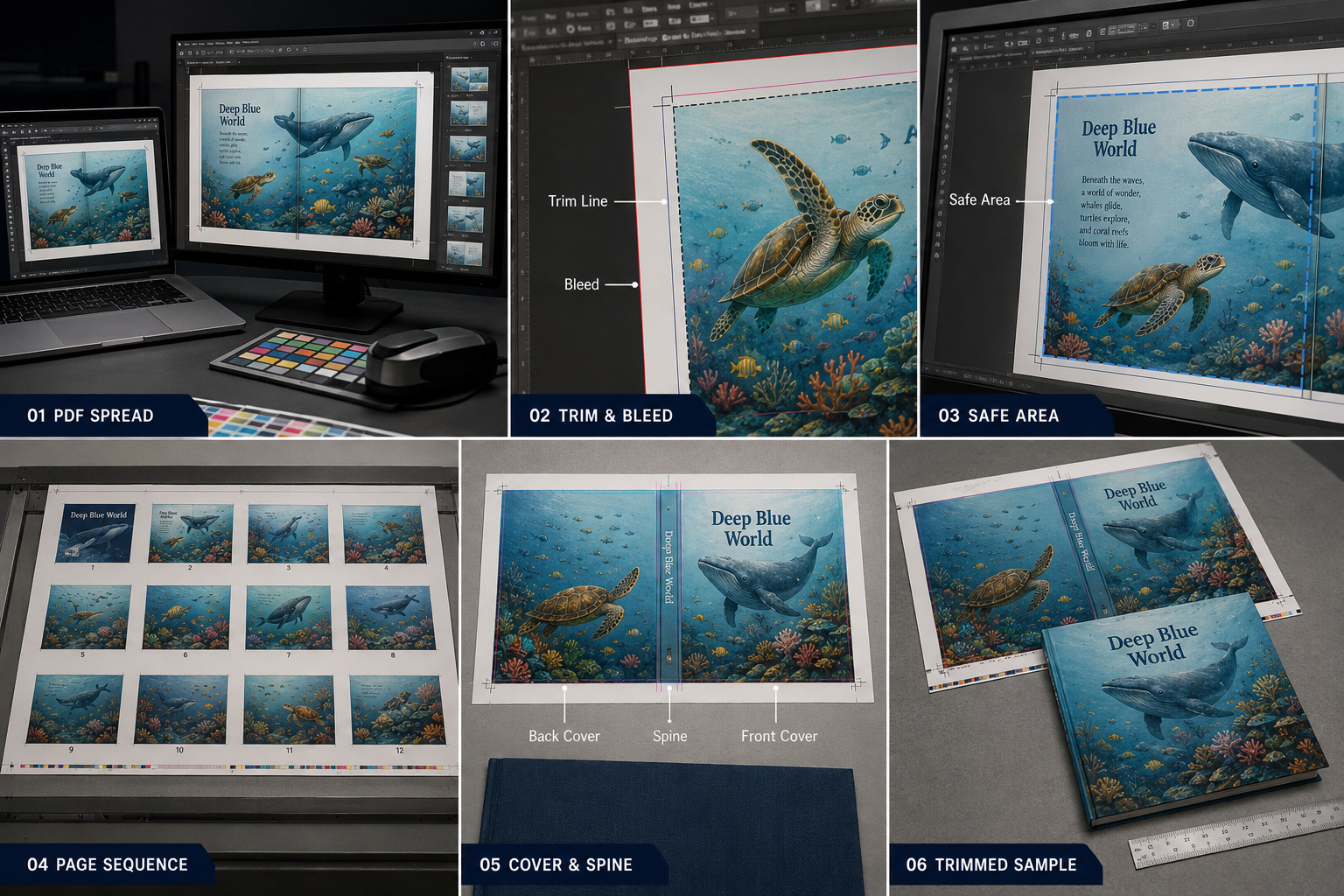
Interior pages and cover files should normally be supplied as high-resolution PDFs. During prepress review, we check:
- Final trim size
- Bleed area
- Safe area
- Page sequence
- Image resolution
- Embedded fonts
- CMYK or approved spot-color setup
- Cover and spine dimensions
- Finishing and die-cut layers
Images should be suitable for the intended print size. Low-resolution illustrations may appear acceptable on a screen but lose detail when printed. Fonts should be embedded or converted according to the final design workflow to reduce substitution problems.
Files requiring foil stamping, spot UV, embossing, debossing or die cutting should include separate, clearly named production layers. The position and dimensions of these processes must match the final cover or structural drawing.
Trim Size, Bleed and Safe Area
The trim size is the finished size of the book after cutting. Artwork extending to the page edge must continue beyond the trim line into the bleed area so normal cutting tolerances do not leave unintended white edges.
Important text, page numbers, logos and illustration details should remain inside the safe area. Their position should also account for the gutter and opening behavior of the selected binding.
Custom book sizes are available, but size affects sheet utilization and production cost. A small change in width or height may alter how many pages fit on a press sheet. Before finalizing an unusual trim size, we can review whether a more efficient dimension would maintain the intended appearance while reducing paper waste.
Page Count and Page Sequence
Interior pages should be submitted in the correct reading order unless another arrangement has been agreed. Blank pages, endpapers and printed inside covers must be identified clearly.
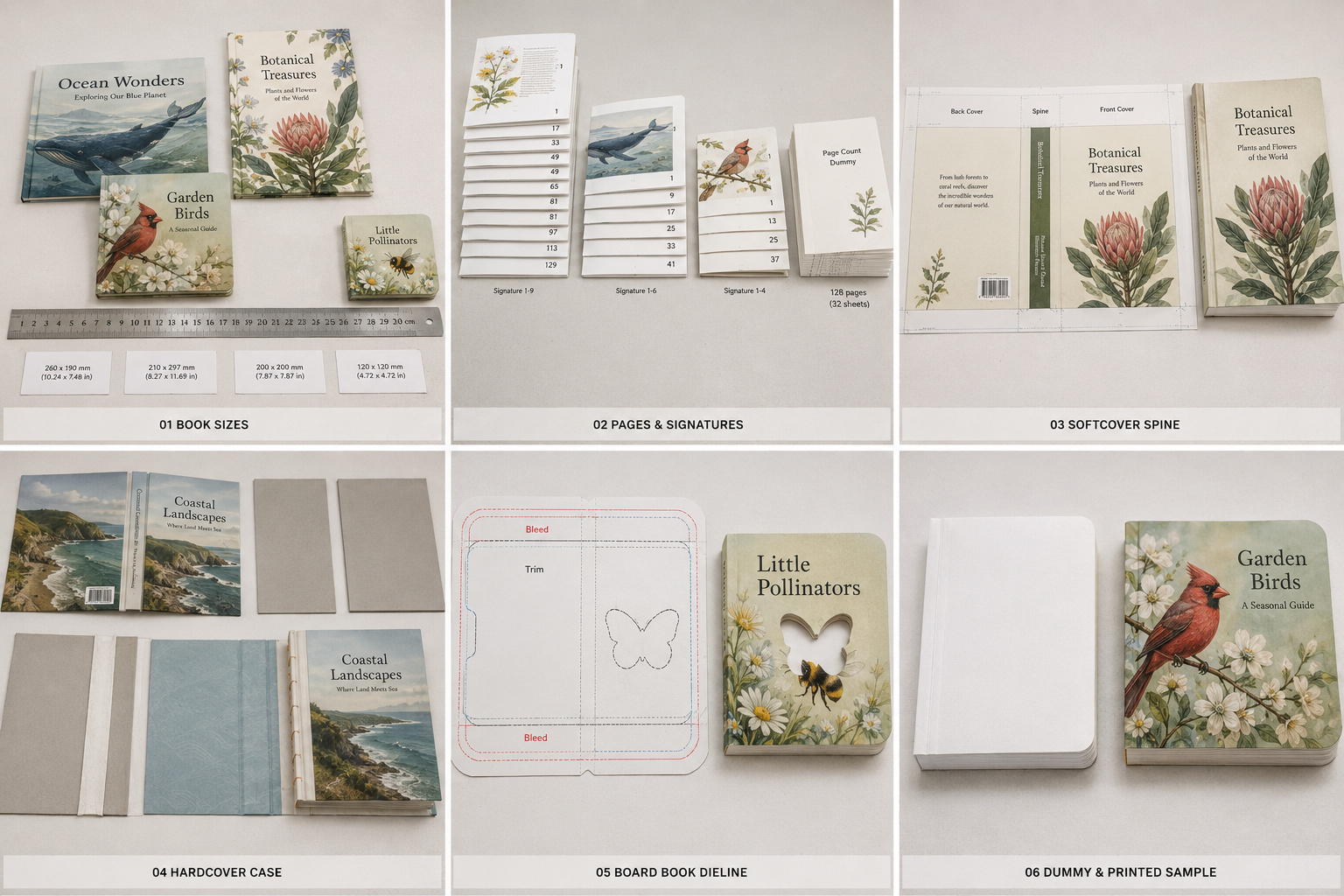
Page-count requirements depend on the binding structure. Saddle-stitched books normally require page counts compatible with folded signatures. Perfect-bound, sewn and casebound books allow different configurations but still depend on paper thickness and signature planning. Board books are calculated differently because each thick leaf is created by mounting printed sheets onto board.
The relationship between page count and construction is explained further under Binding & Book Structure.
Cover, Spine and Structural Files
Softcover and hardcover files normally require a complete cover spread containing the back cover, spine and front cover. Spine width is calculated from the interior page count, paper thickness and binding method. It should not be estimated before these specifications are confirmed.
Hardcover books may also require information about cover-board overhang, joint width and endpapers. Board books, die-cut books and books with flaps or inserts may need a separate dieline showing cutting, folding, gluing and safe artwork areas.
When a reference sample is supplied, we compare its finished structure with the proposed artwork and materials. Differences in paper thickness, board construction or binding may require adjustments to the original dimensions.
 Preflight Review and Proof Approval
Our prepress team checks the submitted files for production-related issues before CTP plate making. The review is intended to identify technical problems, but the buyer remains responsible for final text, spelling, translation, copyright information, ISBNs, barcodes and page content.
After corrections are completed, a digital proof can be supplied for layout and page-sequence confirmation. Digital proofs normally take approximately 2–4 working days. A physical sample is recommended when finished size, paper, spine, binding, color or special construction must be checked before bulk production.
More details about the confirmation process are available on the Proofing & Sample Approval page.
Information to Submit for File Review
Please provide:
- Book type and finished size
- Interior and cover page count
- Binding method
- Interior and cover materials
- Print-ready PDF files
- CMYK or Pantone requirements
- Dielines or finishing layers
- Quantity per title
- Reference sample, if applicable
- Required completion date and destination
Final production begins only after the artwork, dimensions, page sequence, materials and required proof or sample have been approved.