


Production Support for Rigid Book Structures
Pagebrio Printing produces custom board books and hardcover children’s books for publishers, educational companies, children’s brands, importers and project buyers. These formats use rigid materials and multi-stage assembly, so board thickness, cover construction, hinge position, page alignment and finishing must be confirmed before bulk production.
Projects are manufactured from the buyer’s print-ready PDF files, technical specifications, approved sample or reference book. We review the intended age group, book dimensions, page count, materials, binding structure, surface finish, quantity and packaging requirements before quotation.
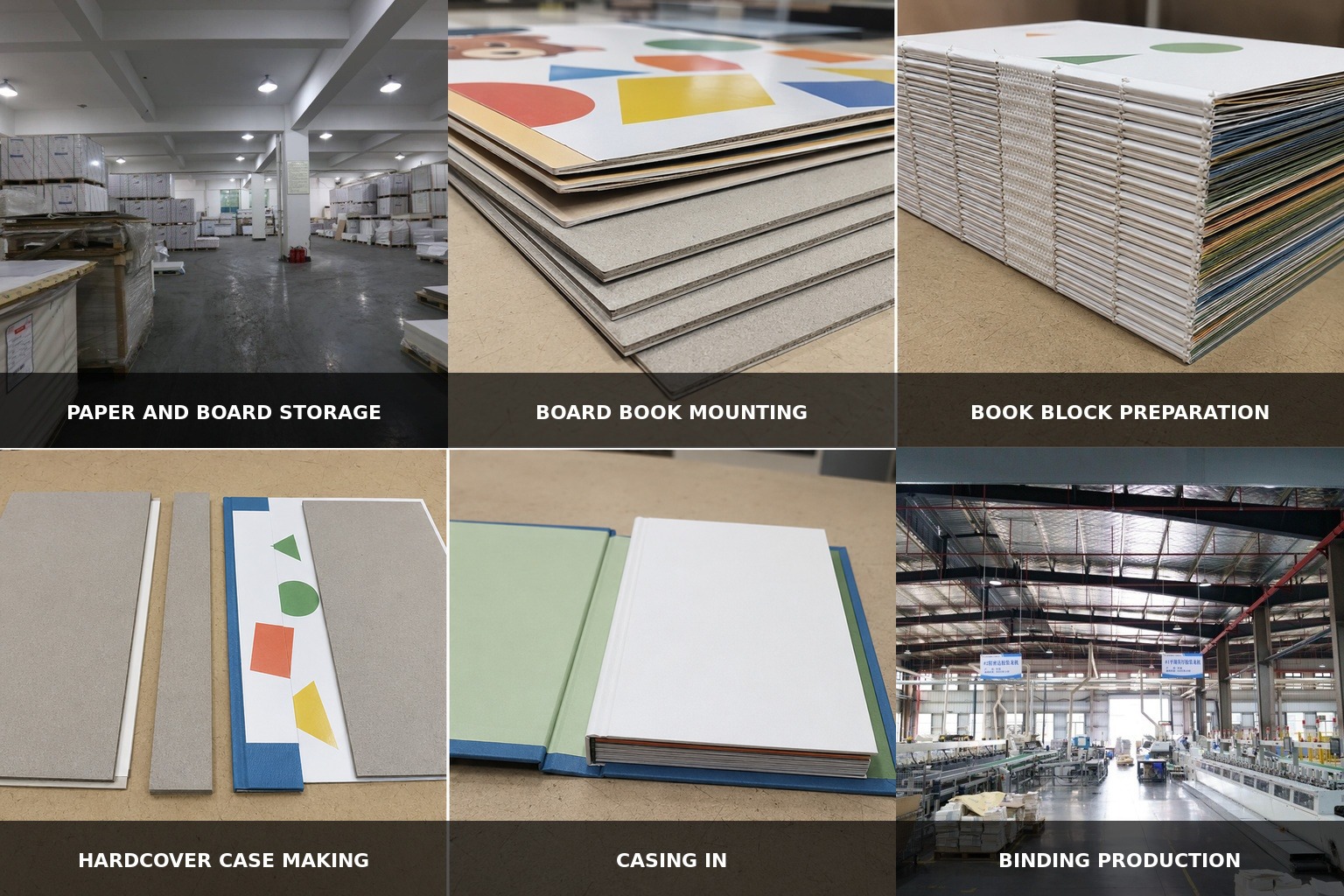 Board Book Mounting and Assembly
A board book is produced from printed sheets that are laminated when required, cut and mounted onto paperboard. The mounted sections are aligned and assembled to form thick pages suitable for frequent handling.
Important production details include board thickness, printed-sheet alignment, adhesive coverage, page sequence and finished trim. Rounded corners, die-cut shapes, flaps or other interactive structures require additional tooling and inspection.
The relationship between board thickness and book size should be reviewed carefully. Increasing the number or thickness of board pages changes the overall spine width, finished weight, opening behavior and carton quantity. Buyers can compare available substrates on our Paper and Board Options page.
Hardcover Case and Book Block Production
Hardcover books are produced from a separately prepared book block and rigid case. The printed signatures are folded, collated and bound before being combined with the cover case through the endpapers.
The case normally includes cover board, a spine section and a printed or selected wrapping material. Board thickness, spine width, hinge spacing and cover-turning allowance must correspond with the finished book block. Incorrect coordination between these elements can cause a tight opening, uneven cover position or an unsuitable spine shape.
Depending on page count and durability requirements, the book block may use sewn or other approved binding structures. The main assembly stages are explained further on our Book Binding and Assembly page.
Cover Finishing and Special Structures
Board books and hardcover books can use gloss or matte lamination to protect the printed surface. Approved projects may also include foil stamping, spot UV, embossing, debossing, die cutting or rounded corners.
Special finishing affects artwork setup, sampling, production sequence and cost. Foil, UV or embossing files should normally be supplied as separate vector layers with clearly defined positions. Die-cut or shaped books require an approved dieline before the artwork is finalized. See Lamination and Special Finishing for the production considerations behind these processes.
Physical Sample Approval Before Bulk Production
A physical sample is normally recommended for board books, hardcover books and projects with unusual structures. It allows the buyer to confirm:
- Finished size and overall thickness
- Paper, board and cover materials
- Page sequence and image position
- Spine, hinge and opening behavior
- Lamination and special-finishing appearance
- Rounded corners, die cutting or interactive elements
- Individual packaging and carton arrangement
Standard physical samples normally require approximately 5–10 working days after artwork and specifications are confirmed. Complex structures may take longer. Changes to board thickness, page count, case dimensions or finishing after approval can require a revised sample and updated quotation.
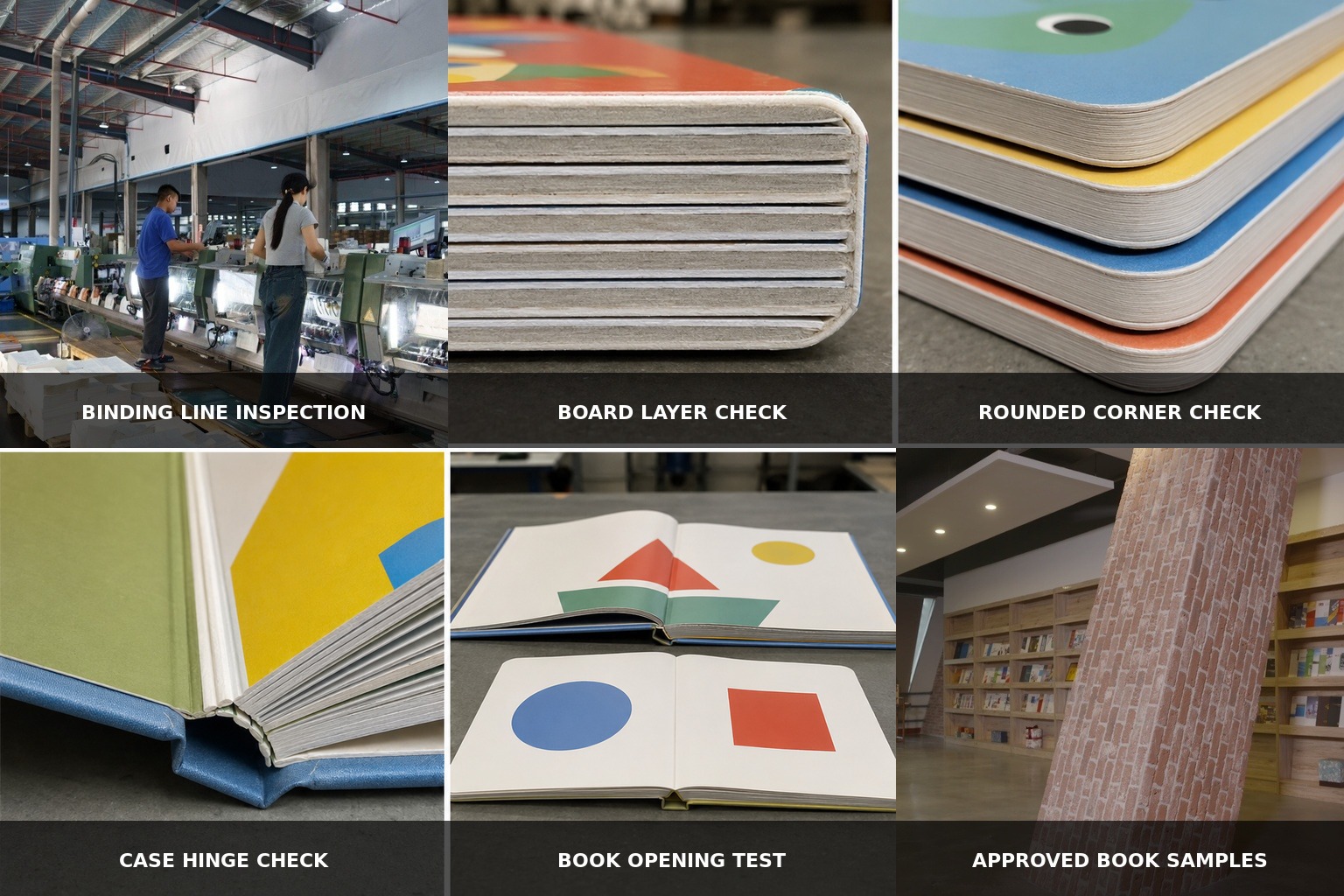 Quality Checks During Production
Inspection points include material verification, print registration, page order, mounting alignment, glue application, book-block position, case fit, hinge movement and finished dimensions. Special finishes are checked for position, surface appearance and registration against the approved sample or specification.
Finished books are also examined for loose pages, exposed adhesive, warped covers, damaged corners and inconsistent opening. Final inspection, count and packing requirements are coordinated through our Quality Control and Inspection process.
Information Required for a Quotation
Send the finished size, page count, paper or board specification, cover construction, binding method, quantity per title and required finishing. Include print-ready PDF files, separate finishing layers and a dieline where applicable.
Please also state whether a physical sample is required, how each book should be packed, the destination and target delivery date. We can then assess structure feasibility, MOQ, proofing, bulk production time and export packing.