


Binding Structure Based on the Book Specification
Binding determines how a children’s book opens, how well it withstands repeated use and whether the finished dimensions remain consistent across a bulk order. Pagebrio Printing handles binding and assembly for board books, hardcover books, softcover books, activity books and spiral-bound titles according to the approved artwork, materials and physical sample.
Before production, we confirm the trim size, page count, paper or board thickness, cover construction, opening behavior and intended use. These details help determine whether a project should use board-book mounting, case binding, perfect binding, saddle stitching, sewn binding or spiral binding.
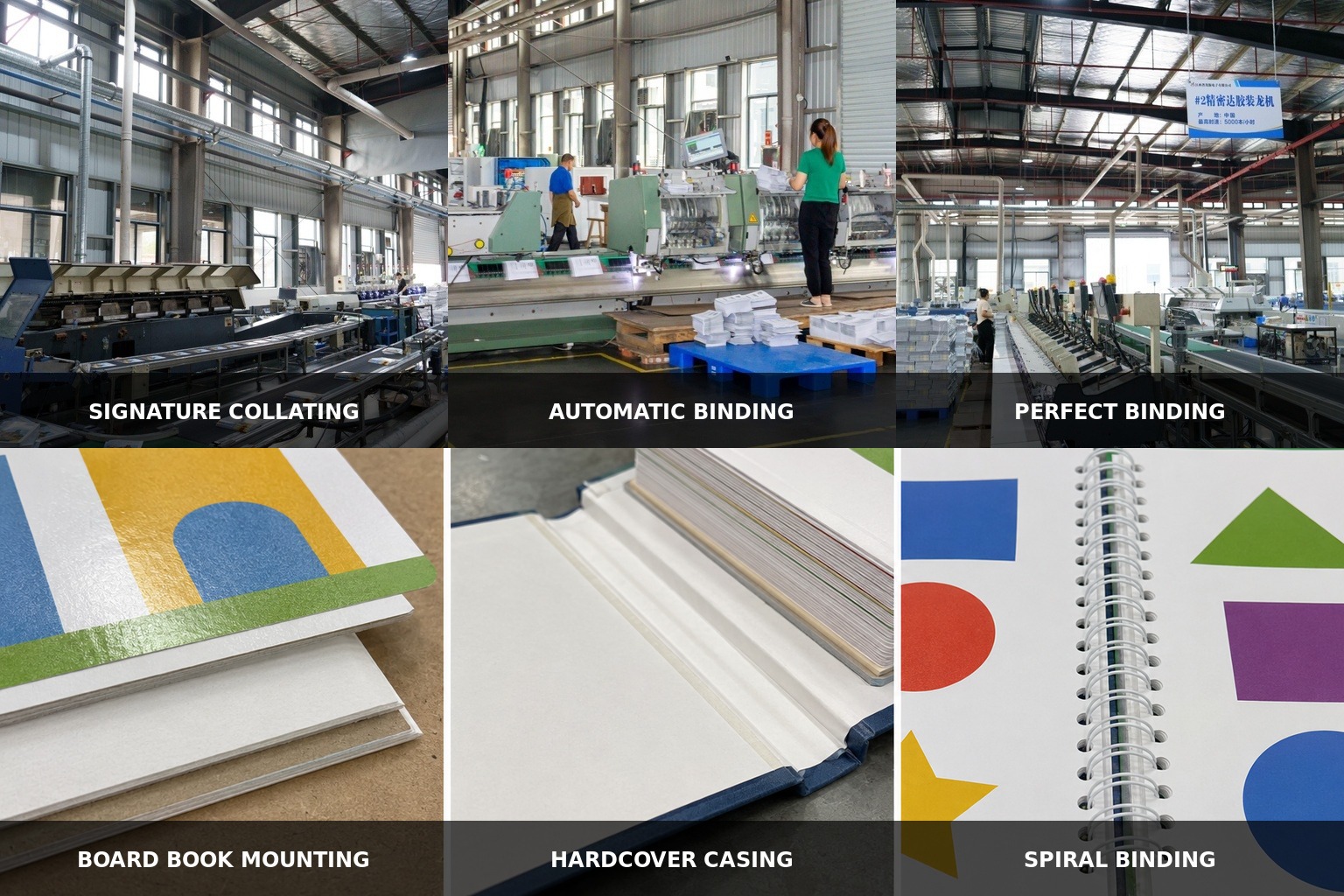 Binding Options for Different Book Formats
Board books are assembled from printed and laminated sheets mounted onto board. Consistent board thickness, adhesive coverage, page alignment and corner treatment are important because small variations can affect the complete book block.
Hardcover books require separate preparation of the book block and case. The cover board, spine section, wrapped cover and endpapers must work together before the book block is cased in. More details about these two structures are covered in Board Book and Hardcover Production.
Softcover titles may use perfect binding, saddle stitching or sewn construction. Page count, paper thickness and required durability influence the final choice. Spiral binding is suitable for activity and learning books that need flat opening or frequent page turning. Buyers can compare the available structures on our Binding and Book Structure page.
From Folded Signatures to Book Blocks
Printed sheets are cut and folded into signatures before collating. The signature sequence must correspond with the approved pagination so that no pages are duplicated, reversed or missing.
Depending on the structure, signatures may be stitched, sewn or gathered before spine preparation. For perfect-bound books, the spine surface must be prepared for reliable adhesive contact. For sewn books, thread position and signature alignment affect strength and opening behavior. The preceding Paper Cutting and Folding stage therefore directly affects binding accuracy.
During assembly, we monitor page order, spine alignment, glue application, cover position and finished trim. Projects with inserts, flaps, die-cut elements or non-standard structures require additional assembly checks.
Sample Approval Before Bulk Binding
A physical sample is recommended when the project uses thick board, case binding, unusual dimensions, interactive components or special opening requirements. It allows the buyer to confirm book thickness, cover fit, page turning, spine shape and overall handling before mass production.
The approved sample and production specification become the main references for bulk assembly. If changes are requested after sample approval—such as paper GSM, board thickness, page count or binding type—the spine width and cover files may also need revision. These changes can affect sample cost, material use and production lead time.
Binding and Assembly Quality Checks
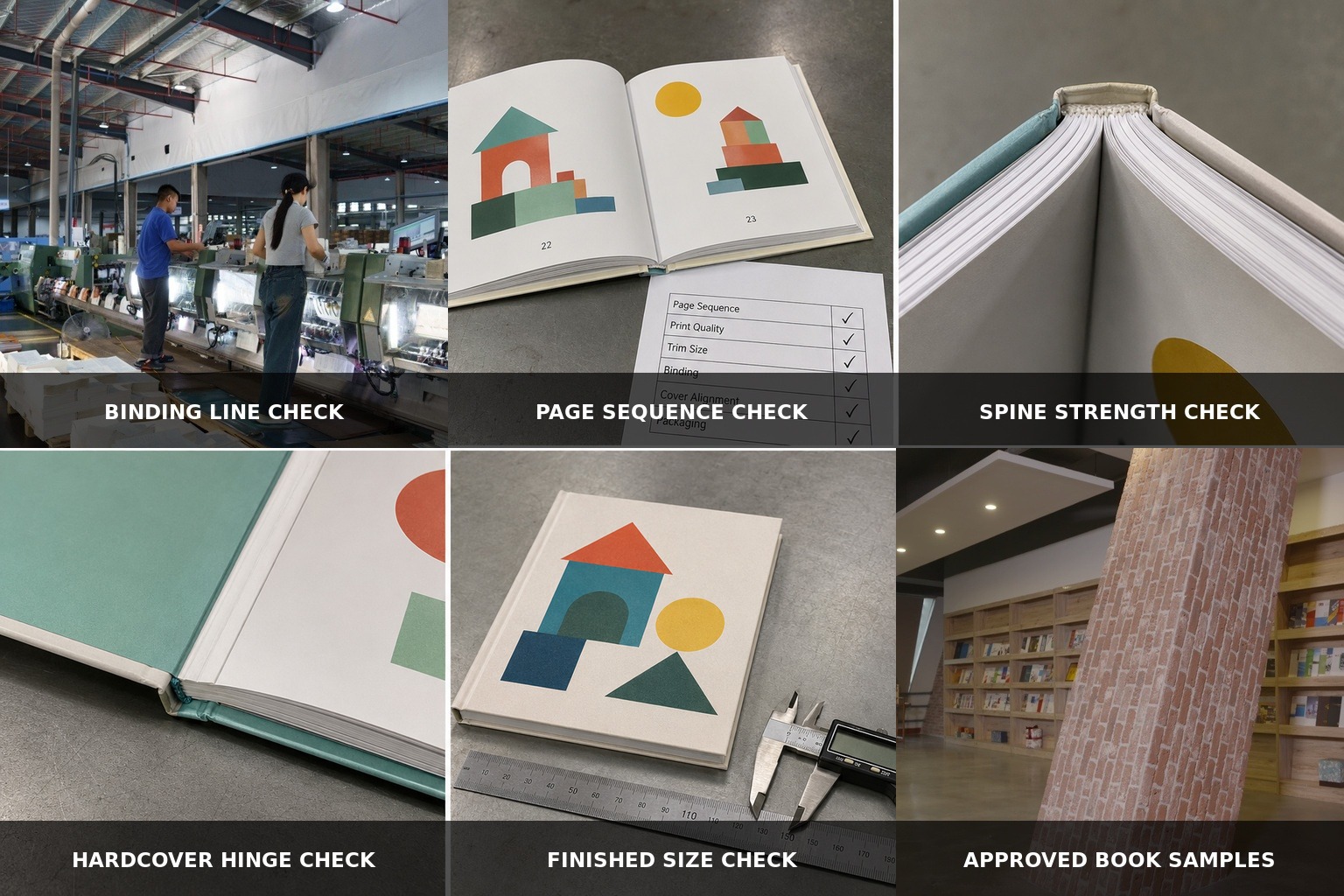
Inspection points are adjusted to the book format. Typical checks include:
- Correct page sequence and orientation
- Book-block alignment and finished dimensions
- Spine adhesion, sewing or staple placement
- Cover registration and casing position
- Endpaper attachment and hinge movement
- Board mounting and layer alignment
- Spiral hole position and coil closure
- Page opening, loose pages and visible glue
- Rounded corners, die-cut edges and overall appearance
Binding defects are easier to control when the artwork, materials and construction have been confirmed before production. Final books continue to Quality Control and Inspection for appearance, structure, count and packing checks.
 Information Needed for a Binding Quotation
For an accurate quotation, send the finished size, page count, paper or board specification, cover structure, binding method, quantity per title and required finishing. Print-ready PDF files, a technical drawing or a reference book are useful for confirming unusual structures.
Please also state whether a physical sample is required and provide the target delivery date and destination. We can then review binding feasibility, MOQ, proofing requirements, bulk production timing and export packing for the project.