


Offset Printing for Illustrated Book Production
Offset printing is the main production method used for custom and bulk children’s books where color consistency, image detail and repeatable output are required across a full print run.
Pagebrio Printing uses multi-color offset presses for board books, hardcover books, softcover books, activity books, photo books, comic books and other illustrated titles. The printing method is selected according to book size, page count, paper, quantity and color requirements.
Unlike single-copy digital printing, offset production requires approved files, CTP plates, press setup and production sheets. These setup stages make it more suitable for volume orders than very small retail quantities.
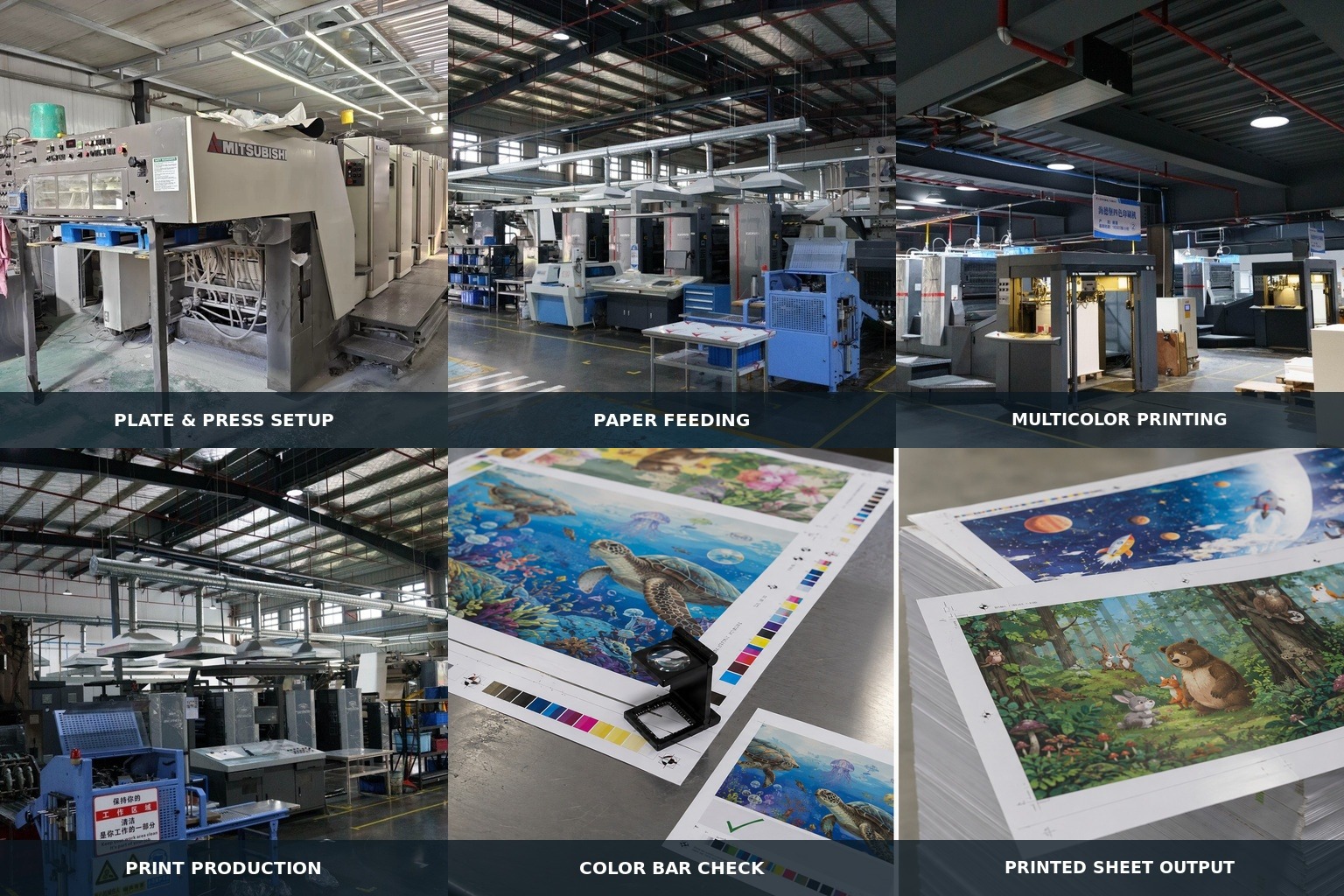 From Approved Plates to Press Setup
Offset printing begins after the imposed files, proofs and CTP plates have been approved. Each plate corresponds to a required printing color and sheet section.
Before production starts, the press team confirms:
- Job title and production version
- Paper type, GSM and sheet size
- Required CMYK or spot-color plates
- Front and reverse printing sequence
- Printing quantity and setup allowance
- Approved proof or physical color reference
The prepress and plate-preparation stages are explained on our Prepress & CTP Plate Making page.
Incorrect files or plates can affect an entire production run. Final text, pagination, color setup and artwork placement should therefore be confirmed before press setup.
Paper Feeding and Printing Stability
Paper must be suitable for the book structure and printing coverage. Coated paper is commonly used for detailed illustrated pages, while uncoated paper may be selected for coloring, writing or a softer visual result.
Paper surface, absorbency, thickness and grain direction influence ink behavior and feeding stability. Material is checked against the approved specification before being released to the press.
During production, sheet feeding and press settings are adjusted to maintain stable registration and ink transfer. Paper selection should be confirmed before color approval because the same artwork can appear different on coated and uncoated stock.
Available materials are described on our Paper & Board Options page.
CMYK and Pantone Color Printing
CMYK is the standard process for full-color illustrations and photographic images. Pantone spot colors can be reviewed where a project requires a defined brand color or solid-color element.
The printed result should be evaluated against an approved proof or physical reference rather than a monitor alone. Screens display color using light, while printed pages reproduce color through ink on paper.
Ink density, paper tone, lamination and surrounding colors can all affect appearance. Buyers with critical color requirements should provide a physical sample, Pantone reference or previously approved book.
More information about color expectations is available on our Printing & Color Options page.
Registration and In-Process Checks
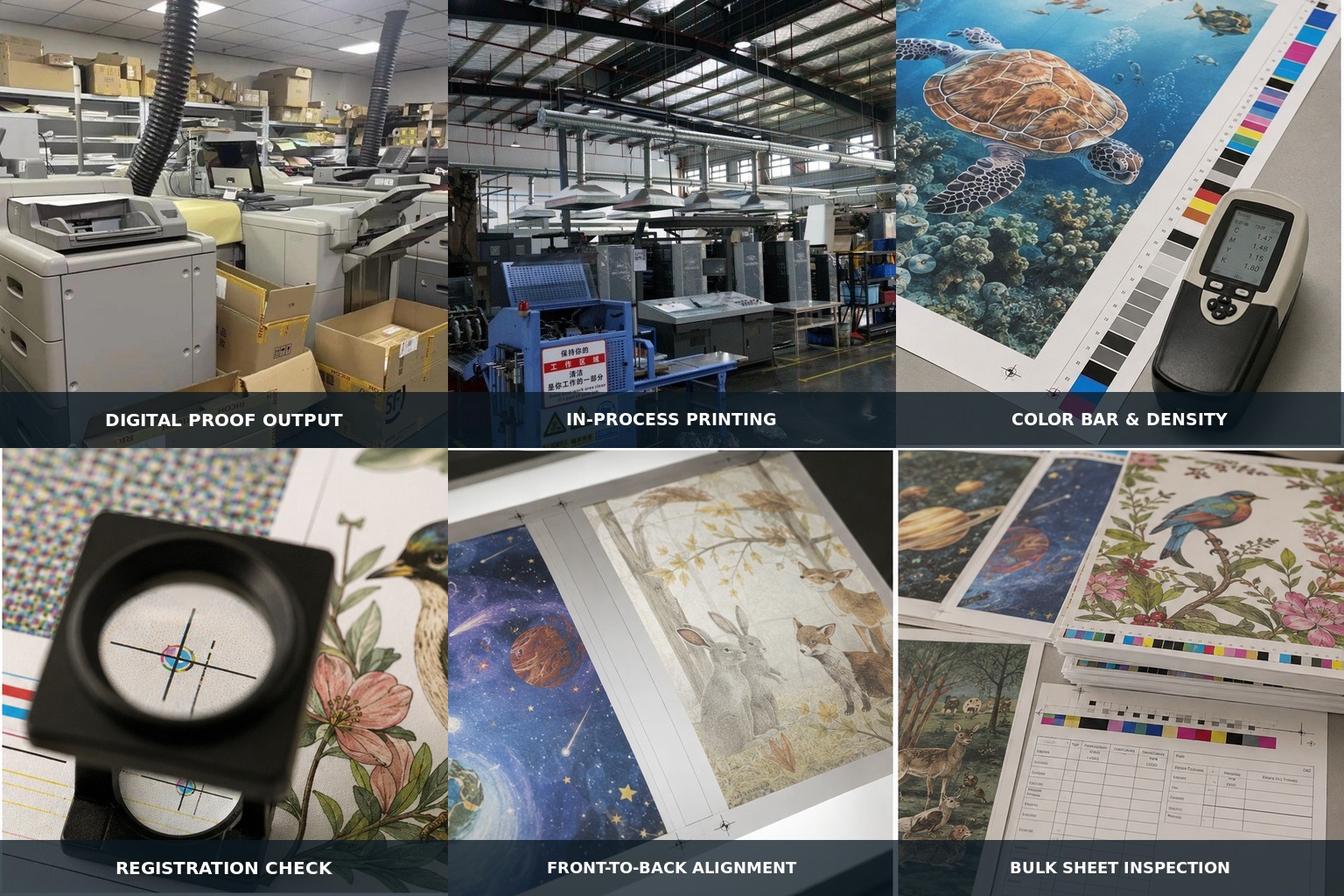
Registration controls the alignment of the printing colors and the position of the image on the sheet. Poor registration can create blurred edges, colored outlines or inconsistent margins.
Production checks can include:
- CMYK color registration
- Ink density and color balance
- Image and text sharpness
- Front-to-back alignment
- Color-bar comparison
- Paper surface and visible marking
- Sheet identification and quantity
Checks are made during the run, not only after all sheets are printed. Adjustments are made when registration or color begins to move outside the accepted reference.
 Color Variation and Practical Approval
Minor production variation can occur during offset printing, especially across long runs or when large solid-color areas are used. The approval standard should therefore be practical and clearly defined before production.
Dark backgrounds, neutral gray tones, skin tones and repeated series titles often require closer control. For reprints, retaining approved artwork, color references and production specifications helps support consistency between orders.
Changes to paper, lamination or printing method can alter the appearance even when the same PDF is used.
Printed Sheet Handling and Next Production Stage
After printing, sheets are identified and organized by title, section and production batch. Depending on ink coverage and paper, sufficient time may be allowed before cutting, folding or finishing.
Printed sheets are then transferred to paper cutting, folding, signature preparation or board-book mounting according to the approved structure. Mixing sections or processing sheets too early can affect page order, surface appearance and downstream binding.
Information Needed for Offset Printing Review
Send the print-ready PDF, finished size, page count, paper specification, binding method, order quantity and color requirements.
Identify any Pantone colors, critical image references, previous approved samples or repeat-order standards. Also confirm whether color will be approved through a digital proof, physical sample or supplied reference.
Printing and finished-book checks continue through our Quality Control & Inspection process before packing and shipment.