


Selecting Materials for the Book’s Intended Use
Paper and board affect the appearance, durability, binding, unit cost and shipping weight of a children’s book. Pagebrio Printing reviews material requirements together with the book type, page count, finished size, printing coverage, binding and intended use.
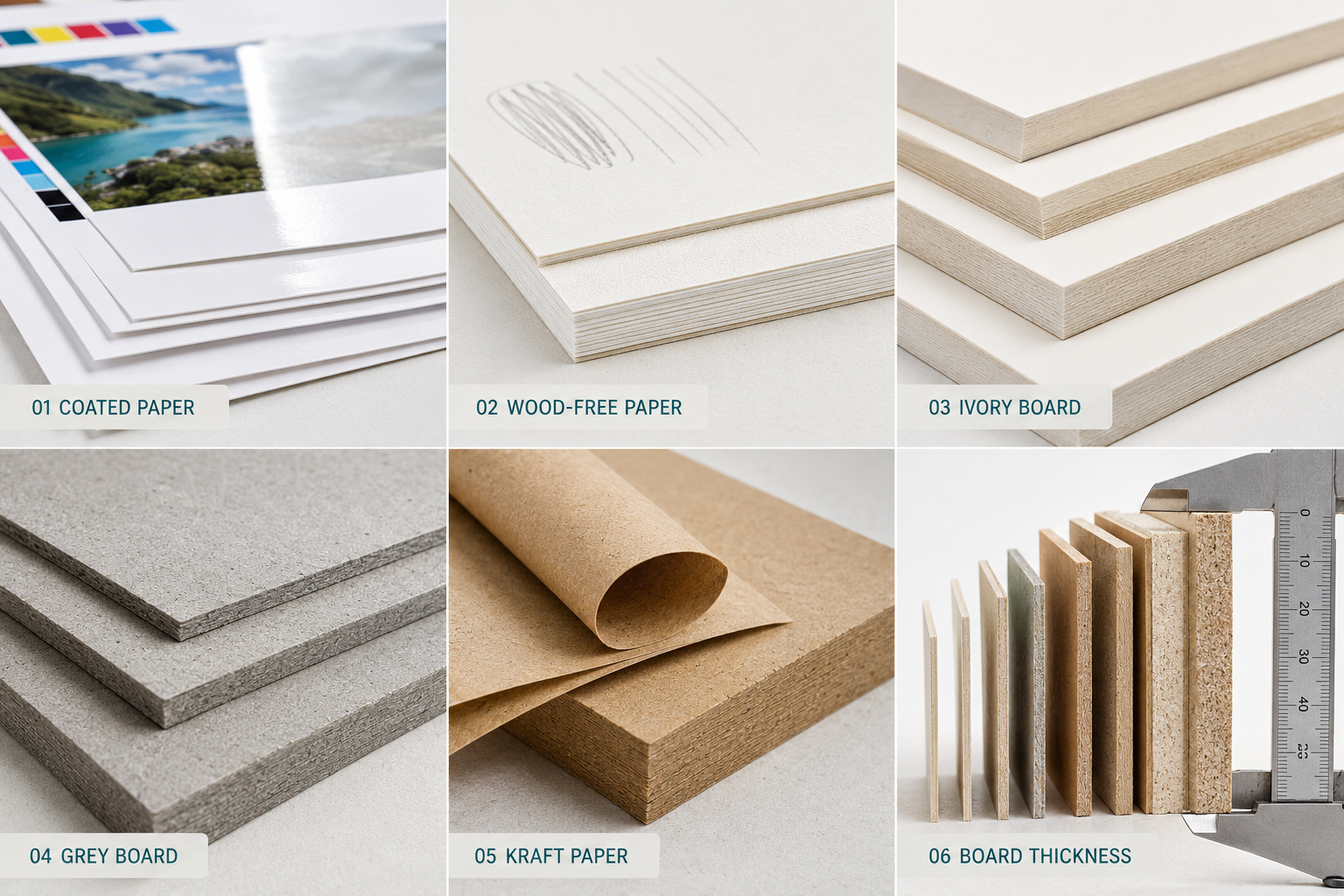
Common materials can include coated art paper, wood-free paper, ivory board, grey board, kraft paper, cardboard and selected specialty papers. The correct specification is not determined by GSM alone. Surface, opacity, stiffness, grain direction and thickness also influence the finished result.
For an accurate recommendation, buyers should provide the book format, target age group, intended writing or reading use, page count, binding, quantity and any reference sample.
 Coated Art Paper for Illustrated Books
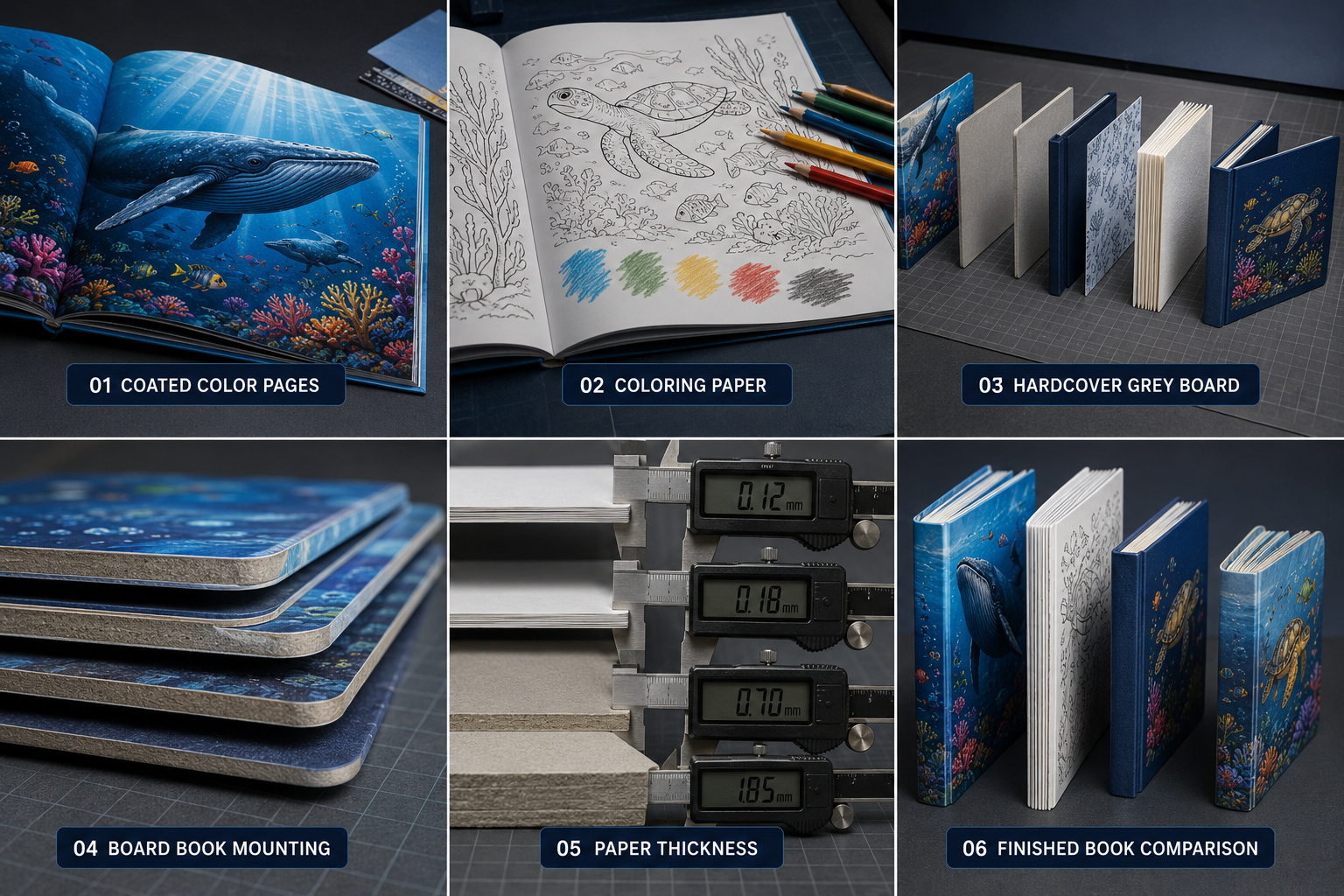
Coated art paper has a smooth surface that supports detailed images and consistent full-color reproduction. It is commonly considered for picture books, photo books, comic books and other illustration-led titles.
Gloss and matte surface effects should be distinguished from cover lamination. The paper’s own coating affects ink appearance, while lamination is an additional finishing layer applied after printing.
The selected GSM must remain compatible with the page count and binding. A heavier interior paper can improve opacity and feel, but it also increases spine width, book weight and freight cost. For thick books, a lighter suitable stock may provide better opening performance and more efficient packing.
Wood-Free Paper for Writing and Reading
Wood-free uncoated paper is often used for coloring books, activity books, workbooks, story books and educational titles. Its less glossy surface can be more suitable for pencils, crayons or writing, depending on the chosen stock and intended media.
Buyers should identify how the pages will be used. Paper suitable for pencils may behave differently with markers, ink pens or water-based materials. If writing performance is important, a physical material or printed sample should be tested before bulk production.
Uncoated paper can also create a softer reading appearance, but color may look less saturated than on coated art paper. Artwork and color expectations should therefore be reviewed with the Printing & Color Options before final approval.
Ivory Board, Grey Board and Cardboard
Ivory board can be used for covers, inserts, cards and selected book structures requiring a clean printable surface and greater stiffness than normal text paper.
Grey board is normally used as an internal structural material rather than a directly printed surface. It can support hardcover cases, rigid covers, book boxes and other constructions where thickness and stability are required. The board is typically wrapped or mounted with printed paper or another approved covering material.
Board books use mounted printed sheets and thick board structures. Board thickness, lamination, rounded corners and mounting quality must be considered together. Excessive thickness can change opening behavior and overall weight, while insufficient stiffness may reduce durability.
The final construction should be confirmed through Binding & Book Structure rather than selecting board only by a nominal GSM value.
 Kraft and Specialty Paper Options
Kraft paper may be selected for covers, wrapping, inserts or packaging where a natural paper appearance is required. Printed colors can appear different on a brown or uncoated base, so artwork may need adjustment or a physical proof.
Selected specialty papers can be reviewed for premium covers, endpapers or project-specific effects. Availability, minimum purchasing quantities and longer material lead times may apply. Buyers should not finalize artwork around a specialty stock until its current availability and printing suitability have been confirmed.
FSC-certified paper can be arranged when required, subject to the chosen stock, supplier availability, order quantity and applicable documentation. Certification claims should only be used for materials and orders supported by the corresponding records.
GSM, Thickness and Grain Direction
GSM indicates material weight per square meter, but materials with the same GSM may have different thickness, stiffness and opacity. For board products, actual thickness is often more useful than GSM alone.
Grain direction affects folding, opening and binding. Incorrect grain direction can contribute to page resistance, cover movement or less stable book construction. Material planning must therefore be coordinated with printing imposition and the selected binding method.
Changing paper after the cover or spine has been prepared may require a new spine calculation and updated cover file. Final material approval should take place before production files are released.
Material Samples and Bulk Production Approval
Digital images cannot fully show paper texture, stiffness, opacity or writing performance. Buyers can request existing material swatches, printed references or a project-specific physical sample.
A sample should confirm:
- Paper or board type
- GSM or thickness
- Surface and opacity
- Printed color appearance
- Folding and opening behavior
- Binding compatibility
- Finished weight and feel
Standard physical samples normally take approximately 5–10 working days. Special materials or complex board structures may require longer. The available approval methods are explained under Proofing & Sample Approval.
Information Needed for Material Selection
Please provide:
- Book type and finished size
- Page count
- Interior and cover requirements
- Binding method
- Intended writing or reading use
- Printing colors and ink coverage
- Quantity per title
- Reference material or finished book
- Packaging and destination
These details allow us to review material availability, structural suitability, sample requirements, MOQ, production time and shipment weight before bulk printing begins.