


Selecting a Structure for the Book’s Intended Use
Binding affects how a children’s book opens, how long it lasts, how many pages it can contain and how much it costs to produce. Pagebrio Printing reviews binding together with the finished size, page count, paper or board thickness, cover requirements, intended use and bulk quantity.
Available structures include board-book mounting, case binding, perfect binding, saddle stitching, sewn binding and spiral binding. The most suitable option should be confirmed before cover artwork is finalized because paper thickness and construction determine spine width, cover dimensions and production setup.
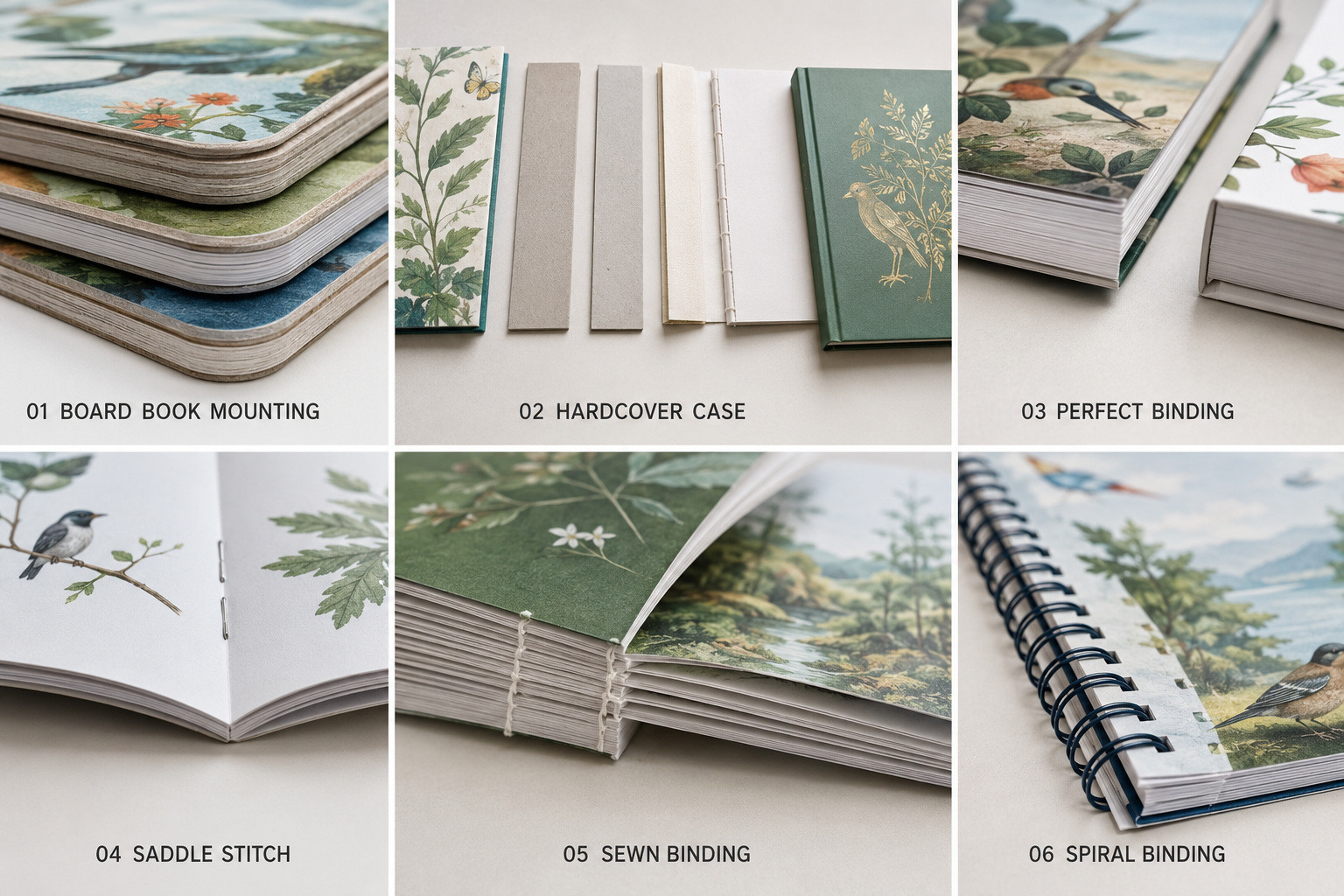 Board-Book Mounting
Board books use printed sheets mounted onto thick board to create rigid pages. The construction is commonly selected for early-learning books, illustrated board books and projects requiring thick pages and rounded corners.
Important specifications include:
- Finished size
- Number of leaves or spreads
- Board thickness
- Printed sheet and lamination
- Self-cover or separate cover structure
- Rounded corners
- Die-cut shapes, flaps or inserts
Mounting accuracy affects page alignment, opening behavior and edge quality. Board thickness also influences total book weight and carton capacity. Special shapes or interactive elements normally require a structural drawing and physical sample before bulk production.
Case Binding for Hardcover Books
Case binding combines a printed or wrapped hardcover case with an interior book block. Grey board provides the main cover structure, while endpapers connect the book block to the case.
A hardcover specification should confirm:
- Cover-board thickness
- Printed or selected wrapping material
- Spine structure
- Endpaper material
- Interior paper and page count
- Sewn or other approved book-block construction
- Lamination and cover finishing
Cover-board size, joint width and spine dimensions must match the final book block. If the paper or page count changes after approval, the cover file may need to be recalculated. Buyers preparing hardcover files should first confirm the main requirements under Artwork, Size & Page Setup.
Perfect Binding and Saddle Stitching
Perfect binding is commonly considered for softcover story books, educational titles, coloring books, comic books and other projects with a defined spine. The pages or gathered sections are secured at the spine and attached to a wraparound soft cover.
The available spine width depends on page count and paper thickness. A book that is too thin may not provide enough spine area for stable binding or readable spine text.
Saddle stitching is generally suited to thinner books with a limited page count. Folded sheets are nested and stitched through the center fold. Page planning must be compatible with folded signatures, and creep may need to be considered on thicker booklets.
Paper grain, page count and finished size affect both structures. Material selection should therefore be coordinated through Paper & Board Options.
Sewn and Spiral Structures
Sewn binding uses thread to secure gathered sections before they are incorporated into the final softcover or hardcover structure. It can improve durability and opening performance for appropriate book specifications, but adds production steps and cost.
Spiral binding is suitable for activity books, learning books, workbooks and reference titles that benefit from flat opening and repeated page turning. The project must confirm:
- Finished size and orientation
- Punching position
- Page and cover thickness
- Coil or wire specification
- Opening direction
- Page count
- Required edge clearance
Punching and coil closure must be checked so pages turn smoothly and the binding does not interfere with artwork or writing areas.
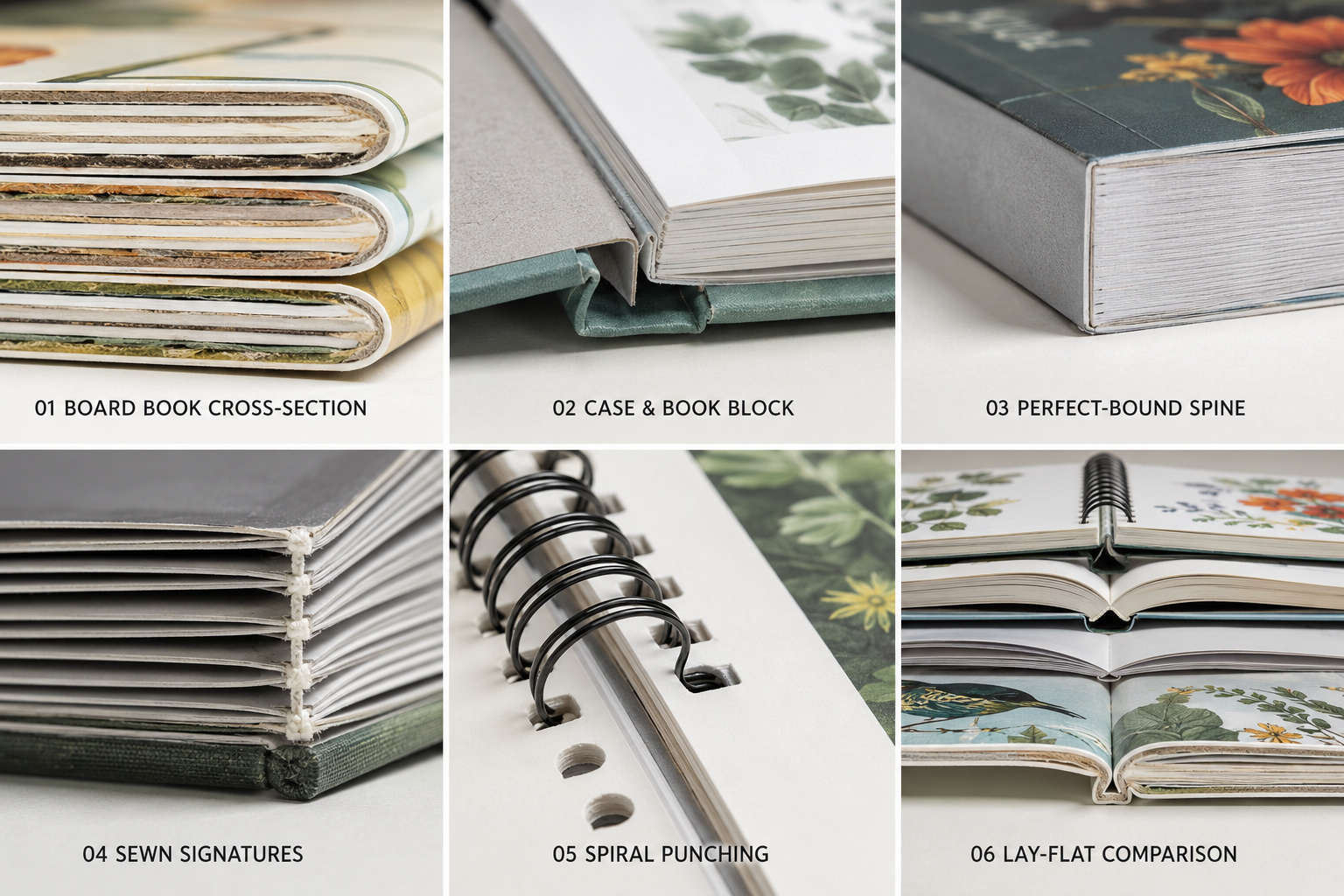 Sample and Pre-Production Confirmation
A white dummy can confirm finished size, page thickness, spine width and opening behavior before printed artwork is applied. A printed physical sample is recommended when cover alignment, board construction, binding strength or special finishing is critical.
Standard physical samples normally take approximately 5–10 working days. Complex board books, die-cut structures and projects with multiple finishing or assembly processes may require longer. Buyers can review available sample methods on the Proofing & Sample Approval page.
Changing the binding after sample approval can affect the cover file, materials, MOQ, quotation and production schedule. Bulk production should begin only after the structure and related specifications are confirmed.
Quality Checks for Binding and Structure
Inspection points are adjusted to the selected construction and can include:
- Page sequence and missing-page check
- Folding and gathering
- Spine alignment
- Stitching or sewing
- Glue application
- Cover and book-block position
- Board mounting
- Corner and edge condition
- Opening and page turning
- Flap, insert or die-cut function
- Finished size and appearance
The approved artwork, technical specification and sample provide the production reference.
Information Needed for a Binding Recommendation
Please provide:
- Book type and intended use
- Finished size and page count
- Interior paper or board
- Cover material and structure
- Preferred binding
- Flat-opening or durability requirements
- Special elements or die-cut structures
- Quantity per title
- Reference sample, if available
- Required production and delivery timing
These details allow us to evaluate structural feasibility, sample requirements, MOQ, production time and the information needed for an accurate quotation.