


Adding Finishing to the Approved Book Structure
Special finishing can change the surface, appearance and function of a children’s book. Pagebrio Printing supports project-based finishing for board books, hardcover books, softcover books, activity books and other approved book structures.
Available processes can include gloss or matte lamination, foil stamping, spot UV, embossing, debossing, die cutting and rounded corners. The suitable process depends on the cover material, book structure, artwork, quantity and intended result.
Finishing should be selected before the cover file and quotation are finalized. Each additional process may require a separate artwork layer, plate, die, material or production step, which can affect sample cost, MOQ and lead time.
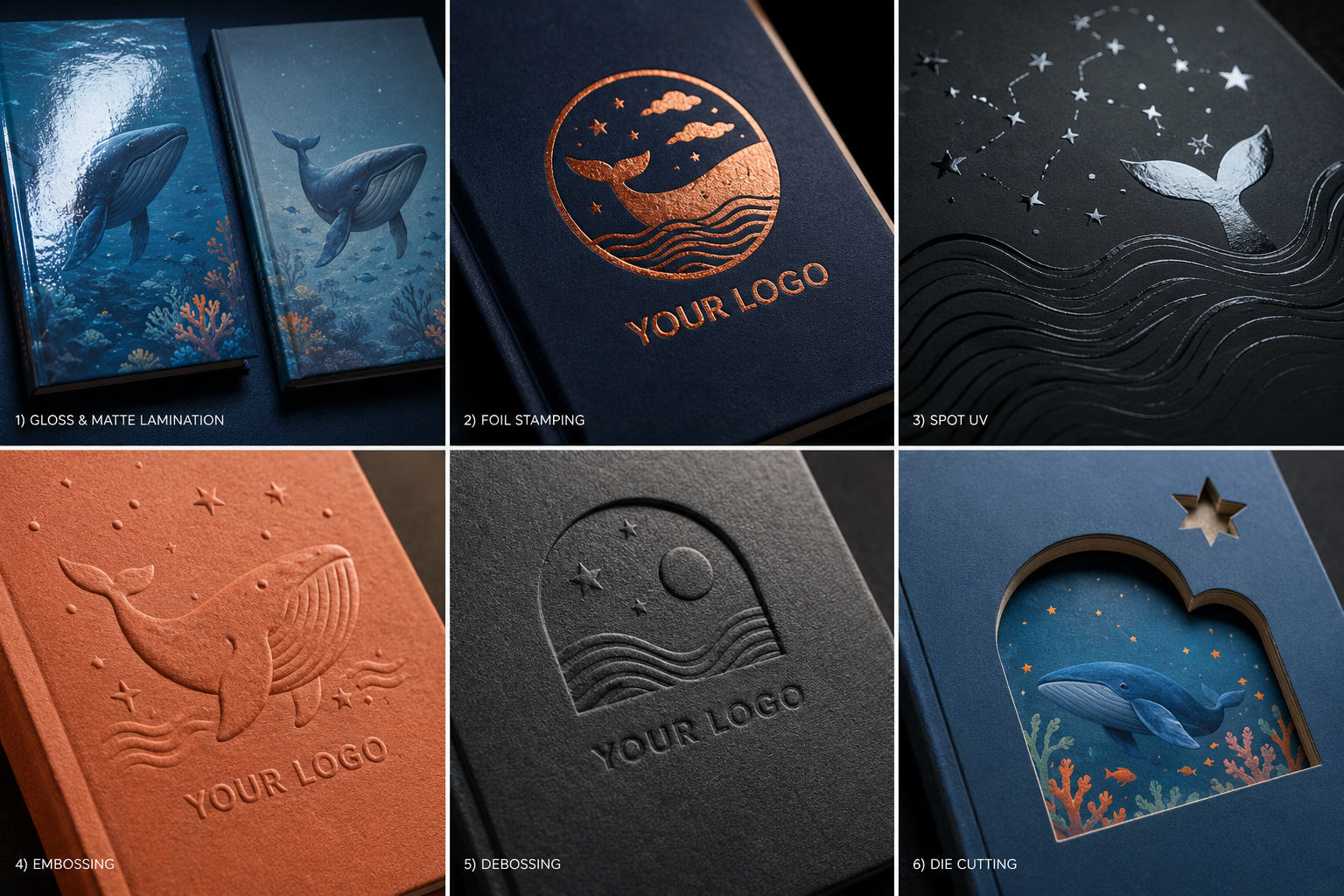 Gloss and Matte Lamination
Lamination adds a protective film to a printed cover or board-book surface. It can improve resistance to handling, light moisture and surface wear, while also changing the visual effect.
Gloss lamination normally creates stronger reflection and greater apparent contrast. Matte lamination produces a softer, less reflective surface but may show rubbing or marks differently depending on the material and color.
The lamination film must remain compatible with folding, mounting, die cutting and other finishing. Dark covers and large solid-color areas should be reviewed carefully because surface marks, scratches or film-related defects may be more visible.
Foil Stamping
Foil stamping applies a metallic or selected foil material using heat and pressure. It is commonly used for titles, logos, borders and small decorative details on hardcover or softcover projects.
Buyers should specify:
- Foil color
- Finished position
- Required size
- Cover material
- Whether embossing is combined with foil
- Reference sample, if available
Very fine lines, small gaps and large solid foil areas require feasibility review. Foil is a separate applied material rather than a CMYK or Pantone printed color. The foil artwork should therefore be supplied as a separate vector layer.
Spot UV, Embossing and Debossing
Spot UV applies gloss to selected areas of a printed surface. It is often used to highlight a title, illustration element, logo or pattern against a matte background. Registration between the printed artwork and UV area must be checked during production.
Embossing raises part of the cover surface, while debossing presses the selected area inward. These processes depend on the cover stock, wrapped material, board construction, artwork size and required depth.
Small text and highly detailed shapes may not produce the intended relief. A physical sample is recommended when the depth, edge definition or alignment is important. Files for spot UV, embossing and debossing should follow the layer requirements explained under Artwork, Size & Page Setup.
Die Cutting and Rounded Corners
Die cutting can create shaped covers, windows, page edges, flaps and selected structural elements. Board books and activity books may also use custom shapes or openings as part of the design.
A die-cut project normally requires:
- A confirmed structural dieline
- Cut line
- Fold or crease line
- Bleed area
- Safe artwork area
- Material thickness
- Finished reference dimensions
The position of text and essential illustration details must allow for cutting tolerances. Narrow sections, sharp internal corners and small detachable areas should be avoided unless they have been technically reviewed.
Rounded corners are commonly considered for board books and selected children’s products. Corner radius, board thickness, lamination and edge quality should be confirmed together.
 Artwork and Sample Approval
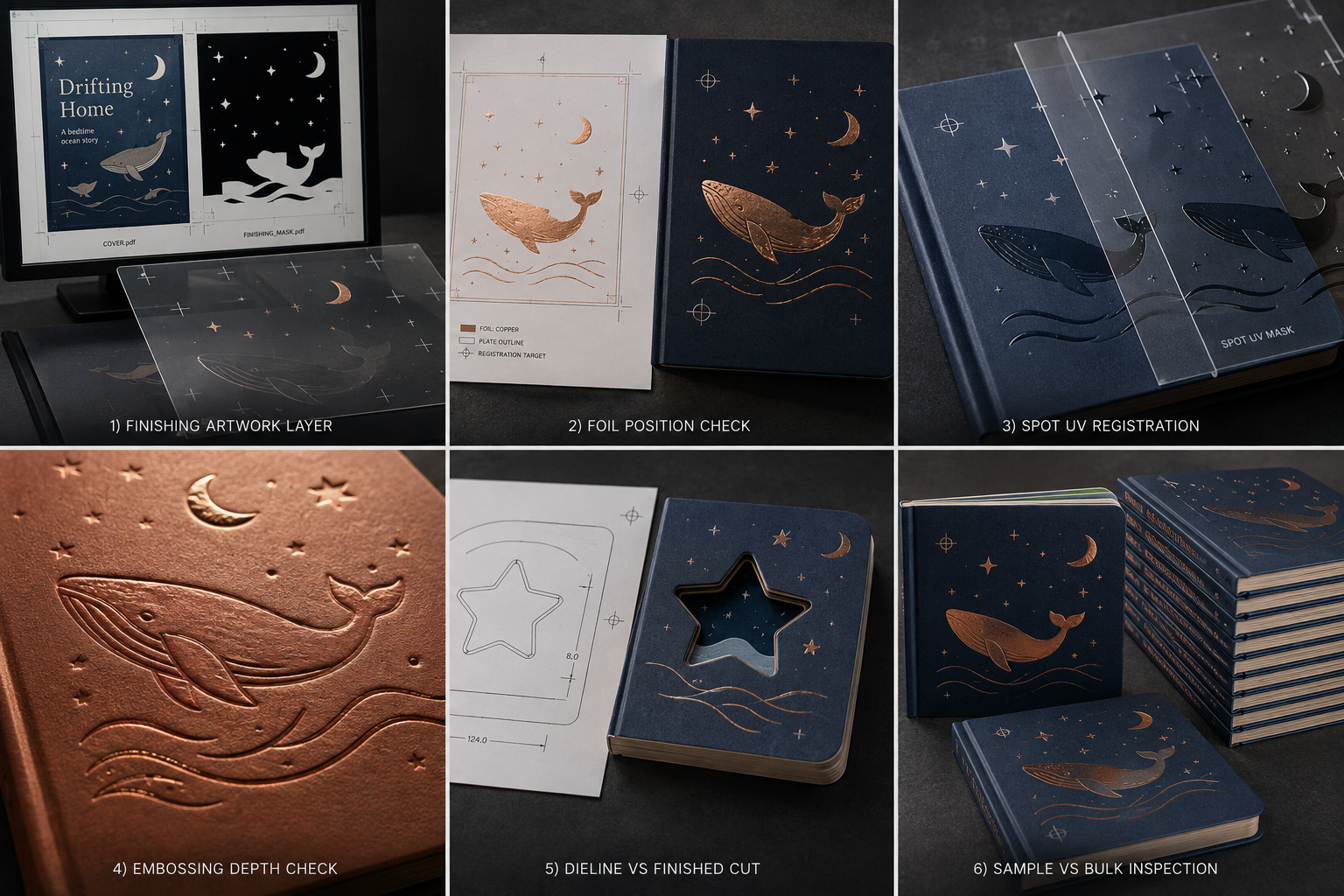
Each finishing process should be supplied on a clearly named production layer, separate from the CMYK artwork. The file should identify the exact position, size and relationship to the printed design.
A digital proof can confirm general position, but it cannot reproduce foil reflectivity, lamination feel, embossing depth or spot UV gloss. Physical samples are recommended for projects where finishing is commercially important.
Standard physical samples normally take approximately 5–10 working days. Projects involving custom dies, special materials, complex structures or several combined processes may require longer. Buyers can review the available confirmation methods under Proofing & Sample Approval.
Effects on MOQ, Cost and Lead Time
Finishing costs can include tooling, plates, dies, foil, film, setup and manual assembly. A process that is economical for a bulk order may represent a higher proportion of the cost on a smaller quantity.
Standard custom book projects normally start from approximately 500–1,000 copies per title. Board books, special structures or highly customized projects may require approximately 1,000–3,000 copies.
Standard production normally takes approximately 25–40 days after approval. Multiple finishes, custom dies or peak-season orders may require approximately 40–50 days.
Finishing Quality Checks
Inspection points can include:
- Lamination adhesion and surface condition
- Foil coverage and position
- Spot UV registration
- Embossing or debossing definition
- Die-cut accuracy and edge condition
- Rounded-corner consistency
- Cover alignment
- Scratches, marks or surface damage
- Comparison with the approved sample
Information Needed for a Finishing Quote
Please provide:
- Book type and finished size
- Cover and interior materials
- Selected finishing processes
- Print-ready artwork and finishing layers
- Dieline or reference sample
- Quantity per title
- Required sample method
- Packaging requirements
- Production and delivery timing
These details allow us to assess feasibility, tooling, sample requirements, MOQ, production sequence and final quotation.