


 Factory-Based Book Production in China
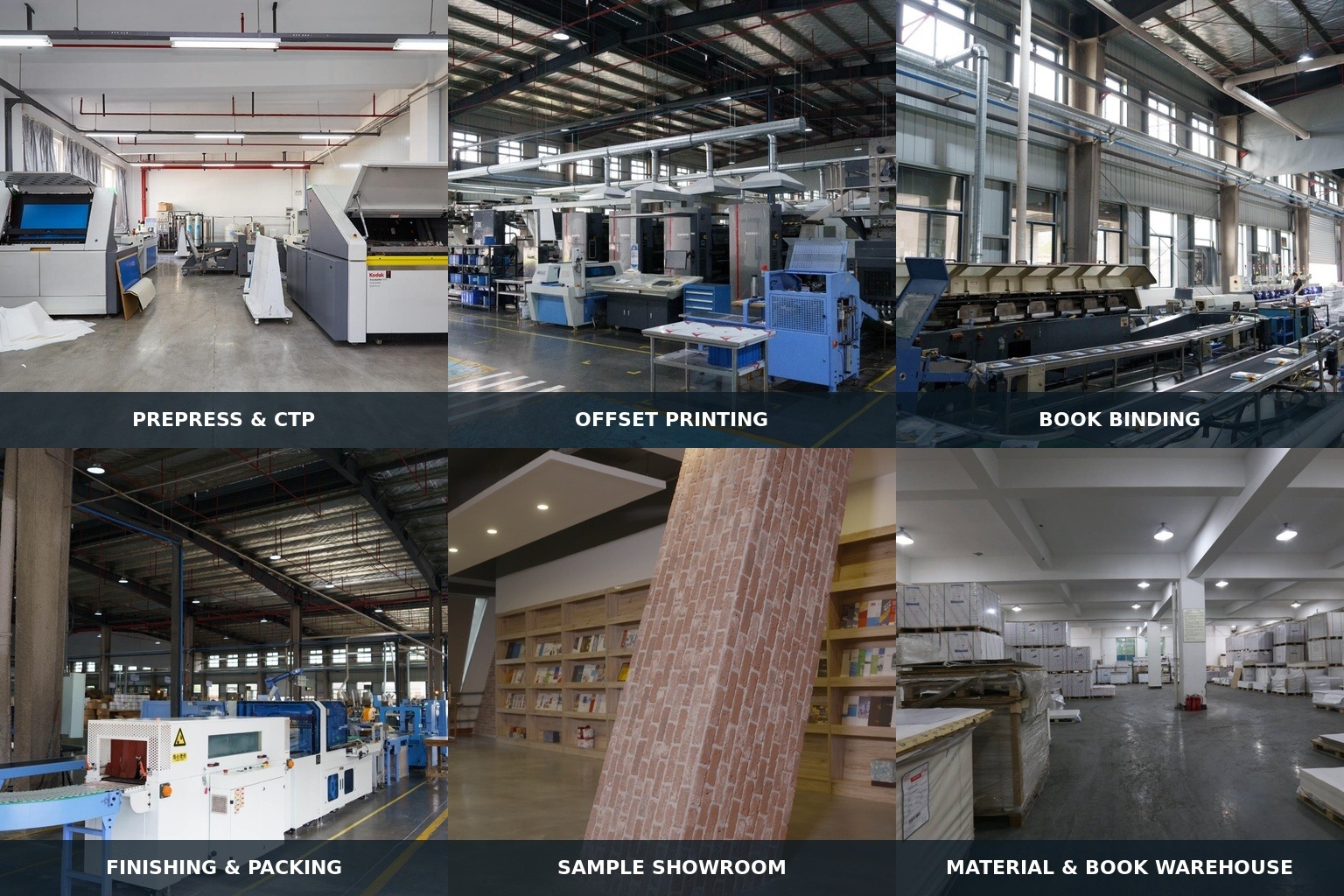
Pagebrio Printing is a China-based children’s book printing manufacturer established in 2010. Our facility in Longgang, Wenzhou supports prepress, offset printing, binding, finishing, inspection and export packing for publishers, educational companies, children’s brands, importers and distributors.
The factory has approximately 6,500–7,000 m² of production space and 110–140 employees across the main production departments. Around five to six main production and finishing lines support monthly capacity of approximately 300,000–500,000 finished books. Actual output depends on book size, page count, binding, finishing complexity and the combination of orders in production.
Our manufacturing scope covers board books, hardcover books, softcover books, spiral books, coloring books, puzzle books, photo books and comic books. Production is project-based rather than retail single-copy printing.
Production Starts with an Approved Specification
Before materials are released, the project specification should confirm:
- Finished size and page count
- Paper or board type, GSM and thickness
- Cover and binding structure
- CMYK or Pantone requirements
- Lamination and special finishing
- Proofing and approval method
- Individual packaging and carton marks
- Bulk quantity, destination and timing
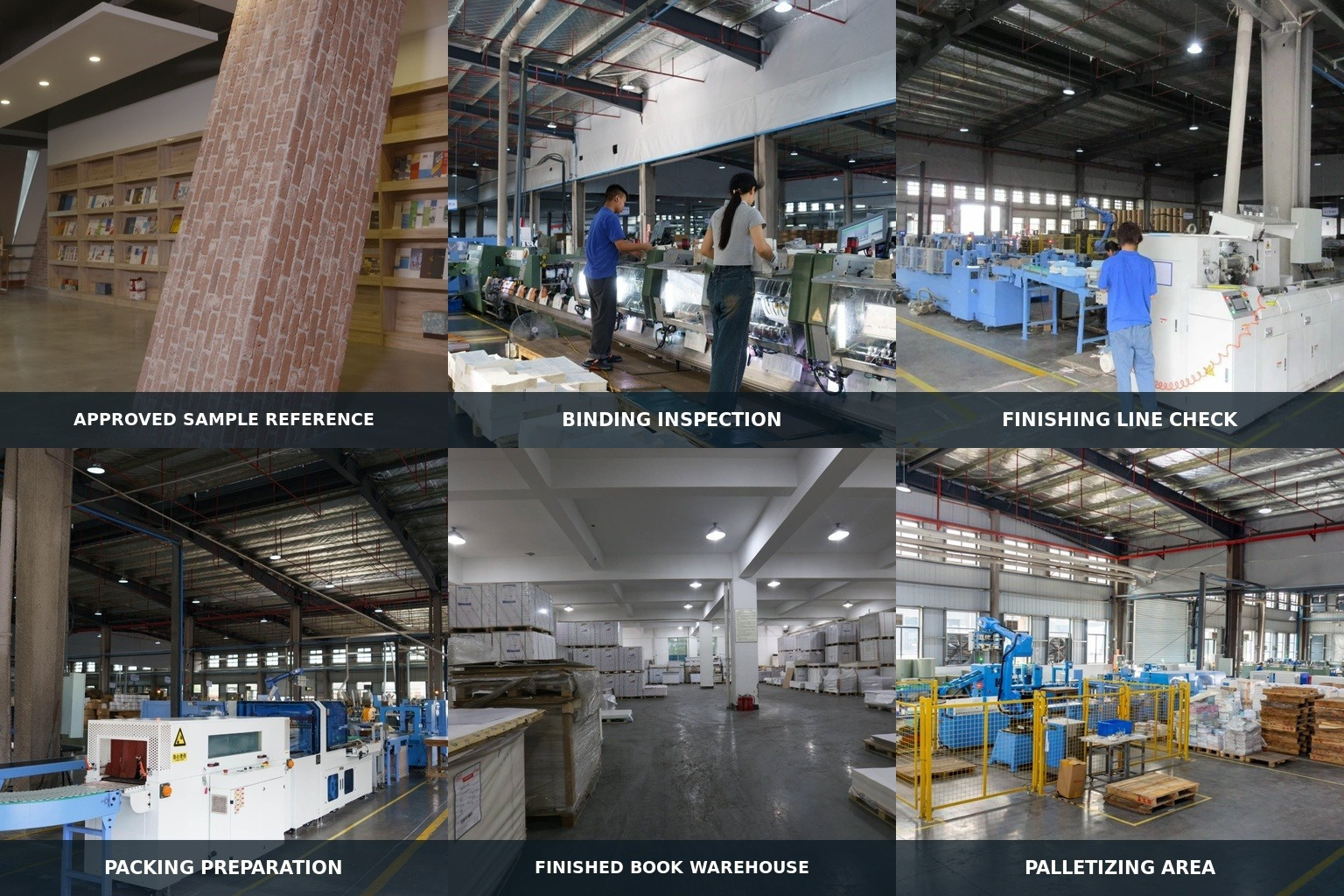
For board books, hardcover books and unusual structures, a physical sample is normally recommended. The approved files, specification sheet, material references and sample then become the control standards for mass production.
Changes made after approval may affect material usage, tooling, production scheduling and lead time. Structure and finishing should therefore be resolved before bulk printing begins.
Prepress and CTP Plate Making
Print-ready PDF files are checked for trim size, bleed, safe areas, page sequence, image resolution, fonts and color setup. Separate artwork layers are required where the project includes foil, spot UV, embossing, debossing or die cutting.
Approved pages are imposed according to the printing sheet and binding structure. CTP plates are then prepared for offset production. Page imposition, spine width and finishing position must be correct at this stage because errors can continue through the entire production run.
See the detailed file and plate workflow on our Prepress & CTP Plate Making page.
Paper Preparation and Offset Printing
Paper and board are checked against the approved material specification. Verification includes material type, GSM, thickness, surface, grain direction and quantity.
These choices directly affect color reproduction, opacity, page thickness, binding performance and finished weight. Coated and uncoated papers can produce visibly different results even when printed from the same artwork.
During offset printing, registration, ink density and color appearance are monitored. CMYK is standard for full-color illustrated pages, while Pantone colors can be reviewed when a project requires defined spot colors. Production sheets are compared with the approved proof or supplied color reference.
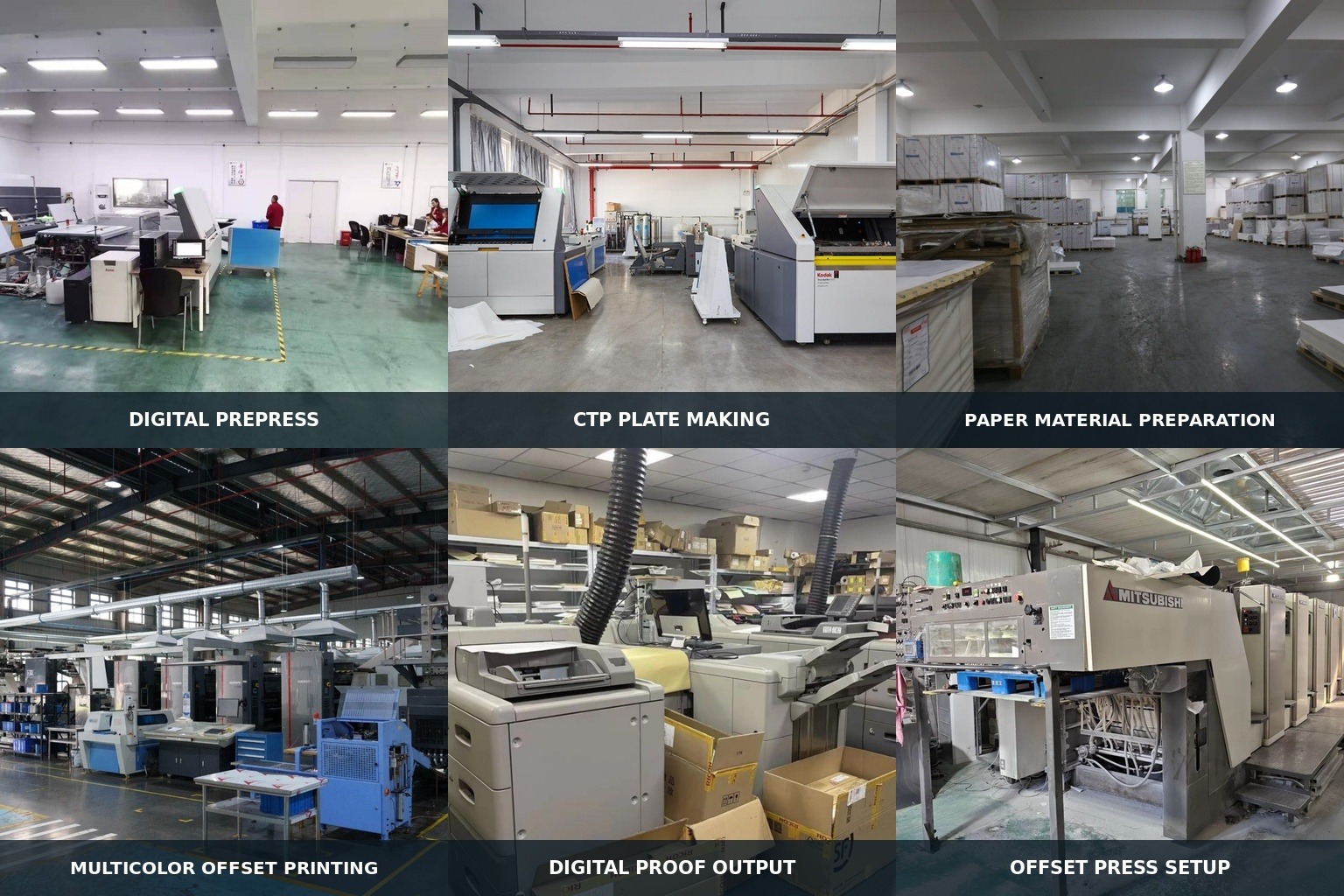 Cutting, Folding and Page Preparation
Printed sheets are cut, folded and organized into signatures according to the page sequence and selected binding method.
Cutting accuracy affects finished dimensions, margins and image alignment. Folding accuracy affects page order, spread position and opening behavior. Board-book pages require different preparation from folded softcover or sewn hardcover signatures.
Prepared page sets are identified by title and production batch to reduce the risk of missing, reversed or mixed sections during assembly.
Binding and Book Assembly
The binding method is selected according to page count, paper thickness, durability, opening behavior and target cost.
Available structures include board-book mounting, case binding, perfect binding, saddle stitching, sewn binding and spiral binding. Board books require printed sheets to be mounted onto thick board before trimming and corner treatment. Hardcover production includes case preparation, endpapers, book-block assembly and casing-in.
Softcover titles may use perfect binding, saddle stitching or sewn construction. Spiral books require accurately positioned holes and controlled coil insertion.
More information is available on our Book Binding & Assembly page.
Lamination and Special Finishing
Finishing options can include gloss or matte lamination, foil stamping, spot UV, embossing, debossing, die cutting and rounded corners.
Each process is checked against an approved position file or physical reference. Registration between artwork and finishing is important, especially around small foil details, shaped die cuts and embossed areas.
Finishing should be confirmed during sample development. Adding or changing a process after printing may require revised artwork, new tooling and additional production time.
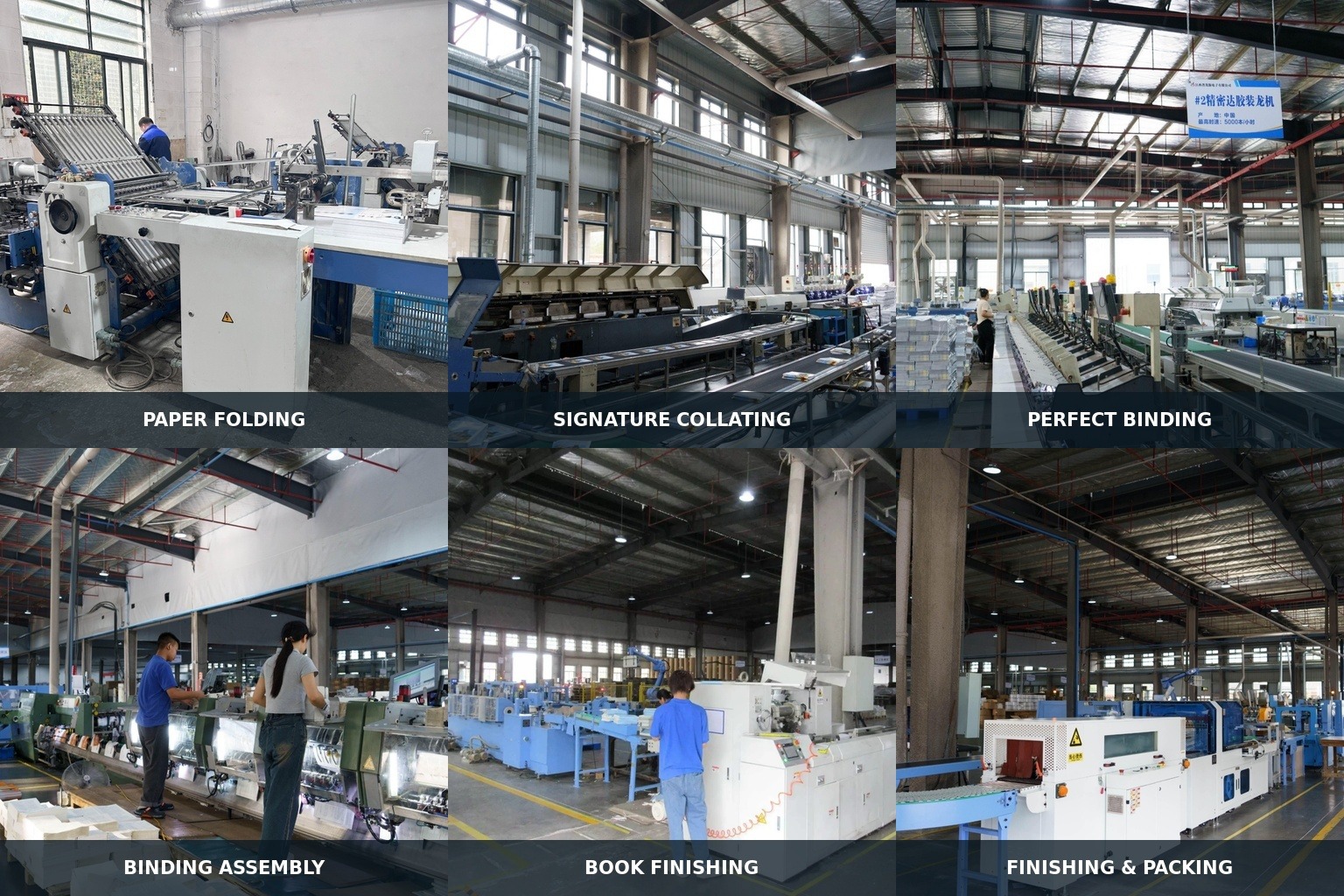 Quality Inspection During Production
Inspection is applied at several production stages rather than only after completion. Control points can include:
- Paper and material verification
- Printing registration and color checks
- Page sequence and binding checks
- Finishing position and structure checks
- Trim size, corners and appearance
- Final quantity and packing verification
Finished books are compared with the approved sample and production specification. Inspection requirements may be adjusted for complex structures, sensitive surface finishes or buyer-specific acceptance criteria.
The full inspection sequence is explained on our Quality Control & Inspection page.
Packing and Export Shipment Preparation
Approved books can be packed in individual bags, shrink wrapping, paper wrapping, custom book-set boxes or export cartons. Buyer carton marks and pallet packing can be arranged according to the receiving and shipping requirements.
Before shipment, the title, quantity, wrapping method, carton count and carton marks are checked. Shipping can be quoted under EXW, FOB, CFR, CIF or DDP according to destination and order details.
 Information Needed for Production Review
Send the print-ready PDF or reference sample, finished size, page count, paper or board preference, binding method, quantity, finishing, packaging, destination and required timing.
We will review manufacturing feasibility, identify proofing or tooling requirements and confirm the practical production sequence before the bulk order is released. Packing and shipment arrangements can then be coordinated through our Packing & Export Shipment process.