


Preparing Artwork for Reliable Book Production
Prepress converts the buyer’s artwork into production-ready files for offset printing, binding and finishing. It is the stage where page size, bleed, page order, image quality, color settings and finishing positions are checked before printing plates are made.
Pagebrio Printing handles prepress preparation for custom and bulk children’s books, including board books, hardcover books, softcover books, activity books, coloring books and illustrated titles. The review is based on the approved book specification rather than appearance alone.
Corrections made at this stage are normally easier and less costly than changes discovered after plate making or printing.
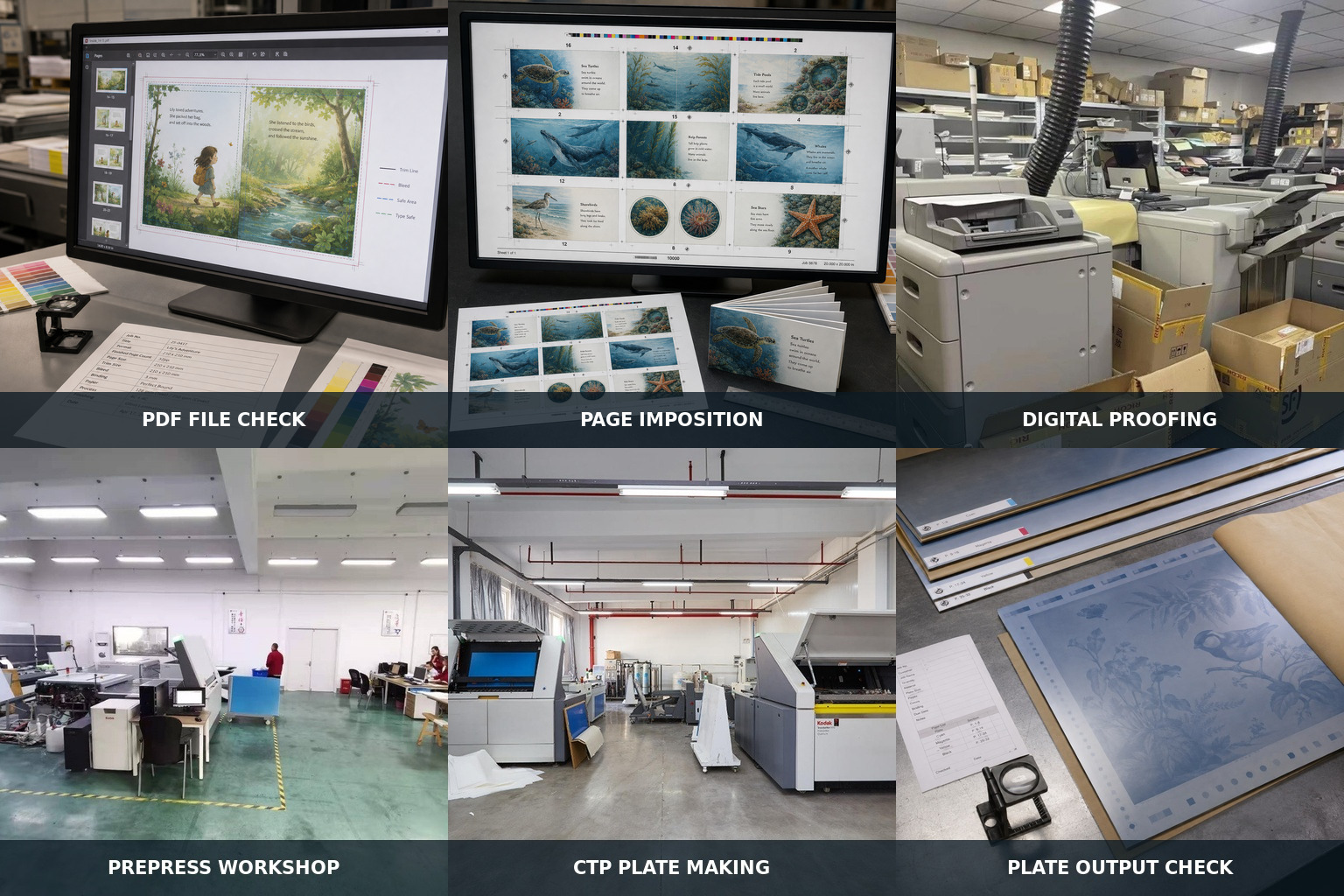 Print-Ready PDF File Review
Print-ready PDF files are preferred for production. Before imposition, we check the supplied files for:
- Finished trim size and page dimensions
- Bleed and safe-area allowance
- Page sequence and orientation
- Image resolution and cropping
- Embedded fonts and text display
- CMYK or specified spot-color setup
- Cover layout and spine width
- Barcode and required legal-copy position
The file should match the confirmed page count, paper and binding structure. A change in paper thickness or page count can alter the spine width of a perfect-bound or hardcover book.
Detailed artwork requirements are available on our Artwork, Size & Page Setup page.
Page Imposition and Binding Structure
Individual PDF pages are not placed directly onto the press sheet in reading order. They must be imposed according to the printing-sheet size, folding method and final binding structure.
Correct imposition ensures that pages appear in the intended sequence after printing, folding, collating and trimming. It also controls page orientation, front-to-back alignment and the position of illustrations across spreads.
Board books require a different page arrangement from folded softcover or sewn hardcover signatures. Covers, endpapers, inserts, flaps and special components are prepared as separate production sections where required.
Color Files and Reference Standards
Full-color children’s books are normally prepared in CMYK. Pantone colors can be reviewed for projects requiring defined spot colors, such as a brand element or a specific solid-color area.
A monitor displays light, while paper reflects printed ink. The finished result can therefore differ from the artwork shown on screen. Paper surface, ink coverage, lamination and surrounding colors can also affect visual appearance.
Buyers should provide an approved physical reference when a particular color is critical. File preparation and color-reference requirements are explained further on our Printing & Color Options page.
Separate Files for Special Finishing
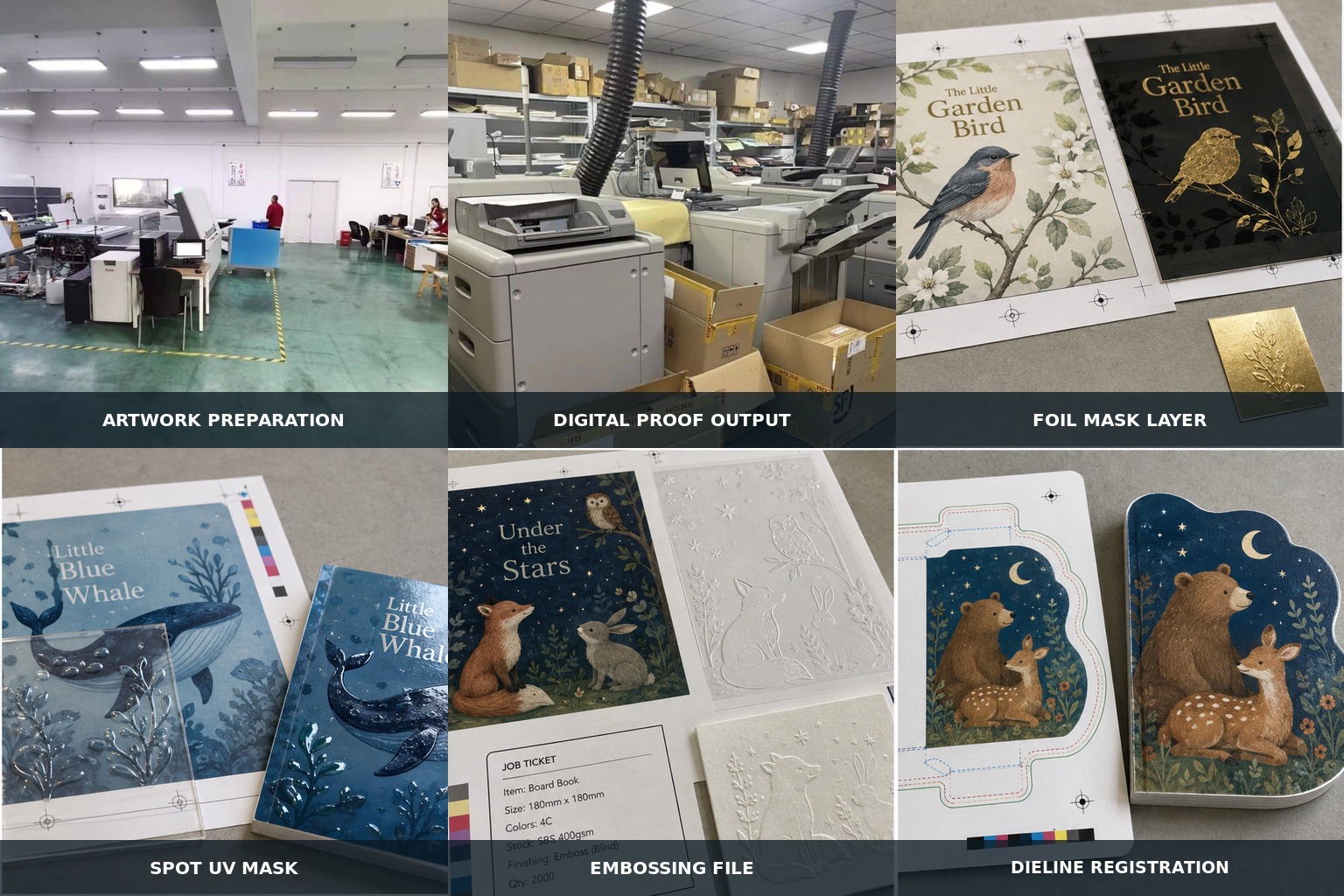
Foil stamping, spot UV, embossing, debossing and die cutting require separate production layers or files. These files should use clear vector shapes and match the position of the printed artwork.
Important checks include:
- Foil or UV position relative to printed elements
- Embossing and debossing size and direction
- Die-line dimensions and cut position
- Distance between finishing and trim edges
- Registration marks for production alignment
Very fine lines, small gaps or finishing close to a fold may need adjustment. Any required change should be approved before tooling or plate preparation.
 Digital Proof and Pre-Production Approval
After the file review, a digital proof can be supplied for checking content, page order, positioning and basic color setup. Digital proofs normally take approximately 2–4 working days after complete files and specifications are received.
A digital proof does not reproduce the exact paper feel, board thickness, binding or every finishing effect. Physical samples are recommended when material, structure, critical color or special finishing must be confirmed. Approval options are detailed on our Proofing & Sample Approval page.
The buyer should return one consolidated set of comments. Revised files are checked again before final approval.
CTP Plate Making and Release to Printing
After artwork and proof approval, the imposed production files are transferred to CTP plate-making equipment. Separate plates are produced for the required offset colors.
The plate output is checked against the approved job information, including title, sheet section, color separation and production version. Plates are then released to the press department together with the printing specification and approved reference.
Once plates have been made, artwork changes may require new imposition, new plates and additional time. Final text, page order, dimensions and finishing positions should therefore be approved before release.
The next manufacturing stage is explained on our Offset Printing page.
Information Needed for Prepress Review
Send the print-ready PDF, finished size, page count, paper or board, binding method, cover structure and finishing requirements. Include the dieline, Pantone references or physical sample where applicable.
Clearly identify any files that are for foil, UV, embossing or die cutting. Also state whether the project requires only a digital proof or a complete physical sample before bulk production.