


Preparing Printed Sheets for Binding
Paper cutting and folding convert printed press sheets into correctly sized pages and signatures for book assembly. These operations affect finished dimensions, page sequence, margin alignment, opening behavior and binding stability.
Pagebrio Printing applies different preparation methods according to the approved book structure. Softcover, hardcover and sewn books usually require folded signatures, while board books, inserts and certain activity-book components may require individual cutting or die-cut preparation.
The cutting and folding plan is confirmed during prepress because sheet layout, page imposition and binding method must work together.
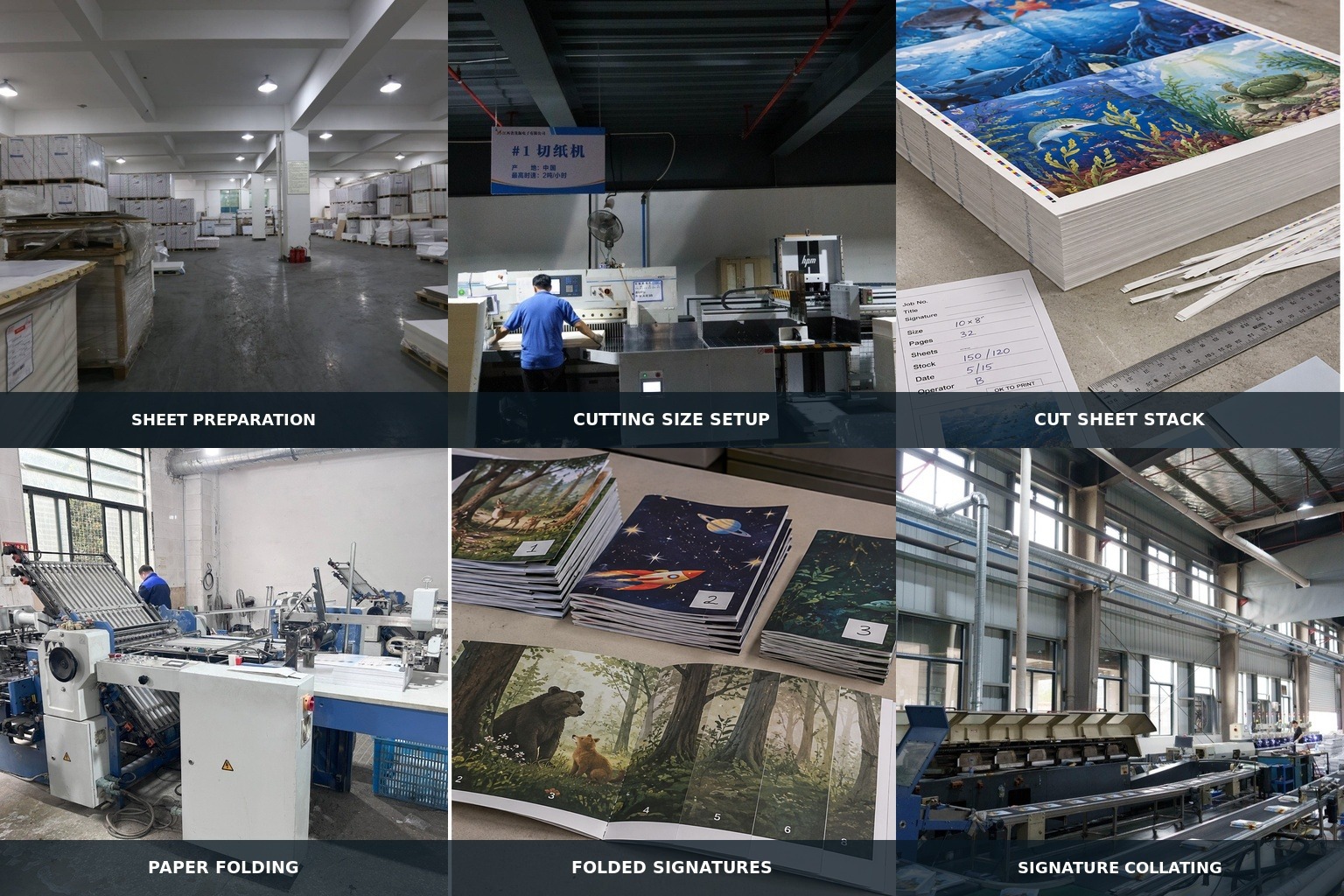 Printed Sheet Identification
Before cutting, printed sheets are identified by title, sheet section, production version and quantity. This helps prevent different titles, revised files or page sections from being mixed during subsequent production.
Sheets may also be checked for:
- Printing registration and color
- Correct front and reverse sides
- Visible surface marks
- Sheet sequence and job number
- Sufficient quantity for binding
- Correct paper type and GSM
Only approved production sheets should be released for cutting. Printing or pagination issues identified at this stage should be separated before further processing.
The previous production stage is described on our Offset Printing page.
Cutting Size and Trim Allowance
Printed press sheets are cut according to the production layout and required folding sequence. Cutting dimensions are not always the same as the final book size because bleed, folding, binding and final three-side trimming must be considered.
Important controls include:
- Cutting width and length
- Image position relative to cut lines
- Squareness of the sheet
- Consistency across the stack
- Paper grain direction
- Allowance for folding and final trimming
Inaccurate cutting can create uneven margins, shifted spreads, inconsistent page sizes or problems during binding. The operator therefore follows the approved imposition and cutting specification rather than measuring from visible artwork alone.
Paper thickness and grain direction can also influence how a sheet cuts and folds. Material considerations are explained on our Paper & Board Options page.
Folding Printed Sheets into Signatures
A signature is a group of pages formed by folding a printed sheet. After folding and binding, the pages appear in the intended reading order.
The folding pattern depends on sheet size, page count, paper thickness and binding structure. Common arrangements can produce four-page, eight-page, sixteen-page or other project-specific signatures.
During folding, the production team checks:
- Fold position and accuracy
- Page order and orientation
- Alignment of illustrations across spreads
- Wrinkles, cracking or damaged edges
- Consistency of the folded signature
- Suitability for collating and sewing
Heavy paper or high ink coverage may require a different folding plan from lighter text paper. A fold that is too tight or incorrectly positioned can affect the spine and opening behavior of the finished book.
Board Books and Non-Folded Components
Board-book pages do not follow the same signature-folding process as standard text sections. Printed sheets may be cut into sections before mounting onto board, lamination, die cutting and corner treatment.
Covers, endpapers, flaps, inserts, activity pieces and special components may also require separate cutting instructions. These parts should be clearly identified in the artwork and production specification.
Final dimensions and component relationships should be confirmed during Artwork, Size & Page Setup before bulk production begins.
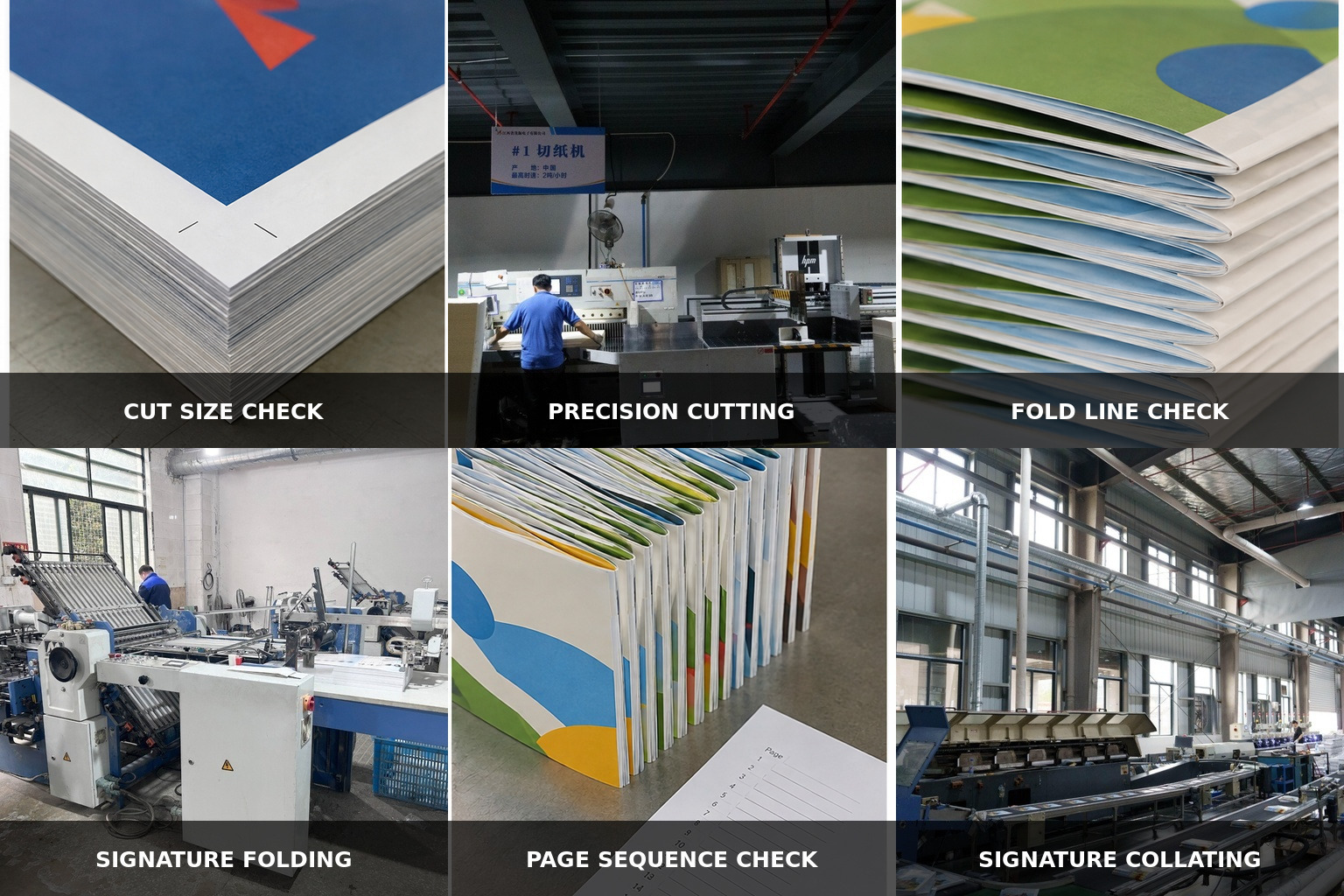 Cutting and Folding Quality Checks
Production checks focus on size consistency, page order and preparation for the next binding operation.
Sample sheets and folded signatures can be checked for trim allowance, squareness, fold position, sequence and visible damage. For illustrated books, alignment across page spreads is also reviewed.
Folded sections are stacked and identified by title and signature number. Clear batch separation reduces the risk of duplicated, missing or mixed sections during collating.
Transfer to Binding and Assembly
Approved signatures and cut components are transferred to collating, sewing, perfect binding, case binding or board-book assembly according to the specification.
The next operation depends on the product:
- Folded signatures may be collated and sewn
- Softcover sections may proceed to perfect binding
- Hardcover book blocks may be sewn or adhesive bound
- Board-book sections proceed to mounting and trimming
- Inserts and covers remain separated until required
More information is available on our Book Binding & Assembly page.
Information Needed for Production Review
Send the print-ready PDF, finished trim size, page count, paper specification and binding method. Clearly identify covers, endpapers, inserts, flaps or components that require separate cutting.
For unusual formats, include a dieline, folded dummy or reference sample. These details help confirm the practical imposition, cutting allowance, folding pattern and production method before plate making and bulk printing.