


Finishing Based on the Approved Book Specification
Lamination and special finishing are applied after printing to protect surfaces, create visual contrast or add structural features to a children’s book. Pagebrio Printing supports these processes for board books, hardcover books, softcover books, activity books and other illustrated publishing projects.
The finishing method must suit the cover material, printed colors, book structure and intended use. Before quotation, we review the artwork, finishing area, quantity, material and required appearance. A process that works well on coated paper may produce a different result on uncoated paper, textured stock or a mounted board surface.
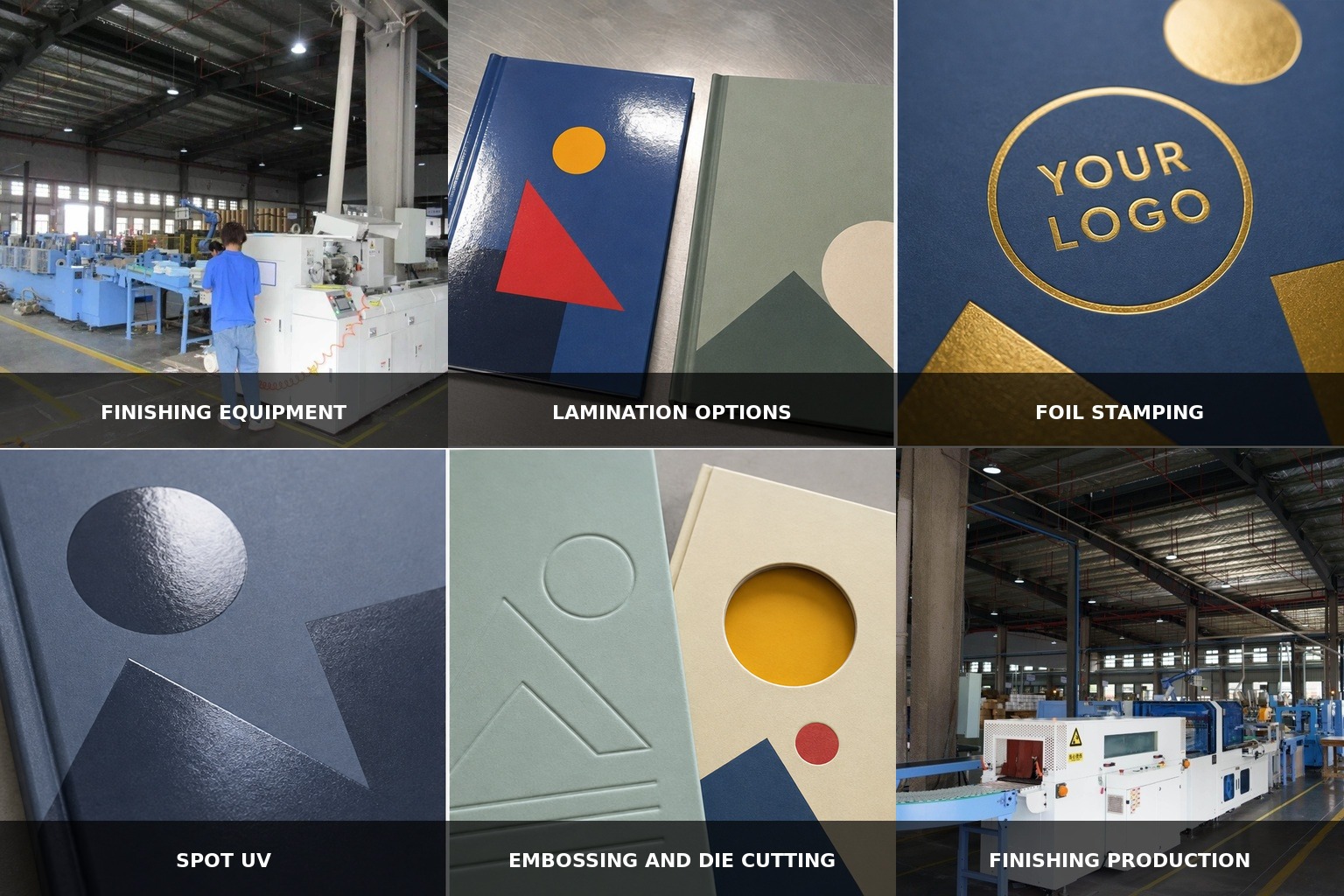 Gloss and Matte Lamination
Lamination adds a protective film to printed paper before binding or board mounting. Gloss lamination produces a brighter, more reflective surface, while matte lamination creates a softer appearance with reduced glare.
The selection affects color appearance, surface feel, rub resistance and compatibility with later finishing. Dark matte covers may show handling marks more easily, while gloss surfaces can make illustrated colors appear more saturated. Lamination also needs sufficient adhesion at folds, wrapped edges and areas that will later be mounted.
The paper, board and surface requirements should be confirmed through Paper and Board Options before production.
Foil, Spot UV and Surface Effects
Foil stamping uses heat and pressure to transfer metallic or colored foil onto a defined area. It is commonly applied to titles, logos, borders and selected illustrations. Fine lines, large solid areas and positions close to folds or edges should be reviewed for production feasibility.
Spot UV creates a glossy raised or flat contrast over selected printed areas. Accurate registration is important, especially when the UV follows small text or detailed artwork. The base surface must also be compatible with the UV coating.
Embossing raises an image above the surface, while debossing presses it inward. These effects depend on the artwork area, board or paper thickness, pressure and die construction. When foil and embossing are combined, both positions must align within the approved tolerance.
Separate vector layers are normally required for foil, spot UV, embossing and debossing. File preparation requirements are explained on our Special Finishing page.
Die Cutting, Rounded Corners and Shaped Structures
Die cutting is used for shaped covers, windows, tabs, flaps and interactive book elements. Board books may also require rounded corners for the complete book or individual mounted sections.
A dieline should define the cut, fold and safe areas before artwork approval. Text, logos and important illustrations should remain clear of cut edges and folds. Small internal corners, narrow bridges and complex shapes may need adjustment to improve strength and production stability.
Die cutting can affect material yield, tooling cost, sample time and assembly speed. Complex structures should therefore be confirmed with a physical sample before bulk production.
Sample and Pre-Production Approval
Digital proofs can confirm artwork position, but they cannot fully reproduce foil reflection, lamination feel, embossing depth or die-cut behavior. A physical sample is recommended when appearance or construction is important.
During approval, buyers should check:
- Lamination type and surface consistency
- Foil color, coverage and position
- Spot UV registration and gloss level
- Embossing or debossing depth
- Die-cut shape, edge quality and alignment
- Fold, hinge and wrapped-edge performance
- Compatibility with binding and packaging
More information about this approval stage is available under Proofing and Sample Approval.
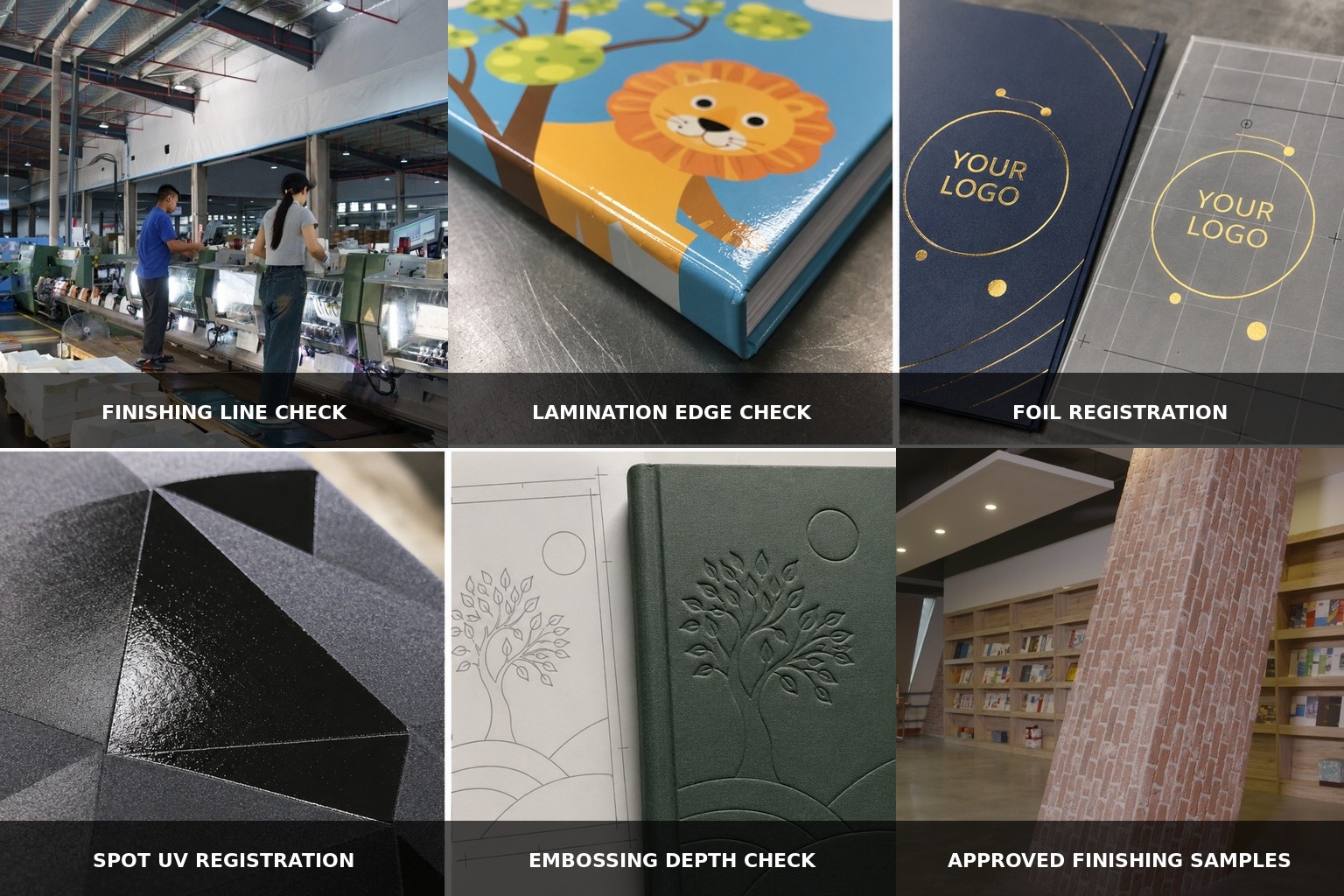 Quality Checks During Bulk Production
Finishing is checked against the approved sample, artwork layer or technical specification. Inspection points include position, registration, coverage, surface cleanliness, adhesion, pressure consistency and cut-edge quality.
We also check for foil gaps, UV offset, laminate bubbles, scratches, uneven embossing, damaged corners and incorrect die-cut positions. Finished sections must remain suitable for the following binding or mounting process.
Information Needed for a Finishing Quotation
Send the book size, material, quantity, finishing method and marked artwork showing every process area. Vector files are preferred for foil, UV, embossing and die cutting.
Please also provide the base printing file, required foil color, lamination type, dieline and reference sample if available. These details allow us to assess tooling, sample requirements, production sequence, cost and lead time before bulk manufacturing.