


Inspection Based on the Approved Specification
Quality control for children’s book printing begins with a clear production specification. Pagebrio Printing checks bulk orders against the approved artwork, materials, book structure, color reference, physical sample, finishing details and packaging requirements.
Inspection points vary between board books, hardcovers, softcovers, spiral books and interactive structures. A board book requires close attention to mounting alignment, board layers and corners, while an illustrated hardcover may require tighter control of color reproduction, casing position and special finishing.
 Incoming Paper and Material Verification
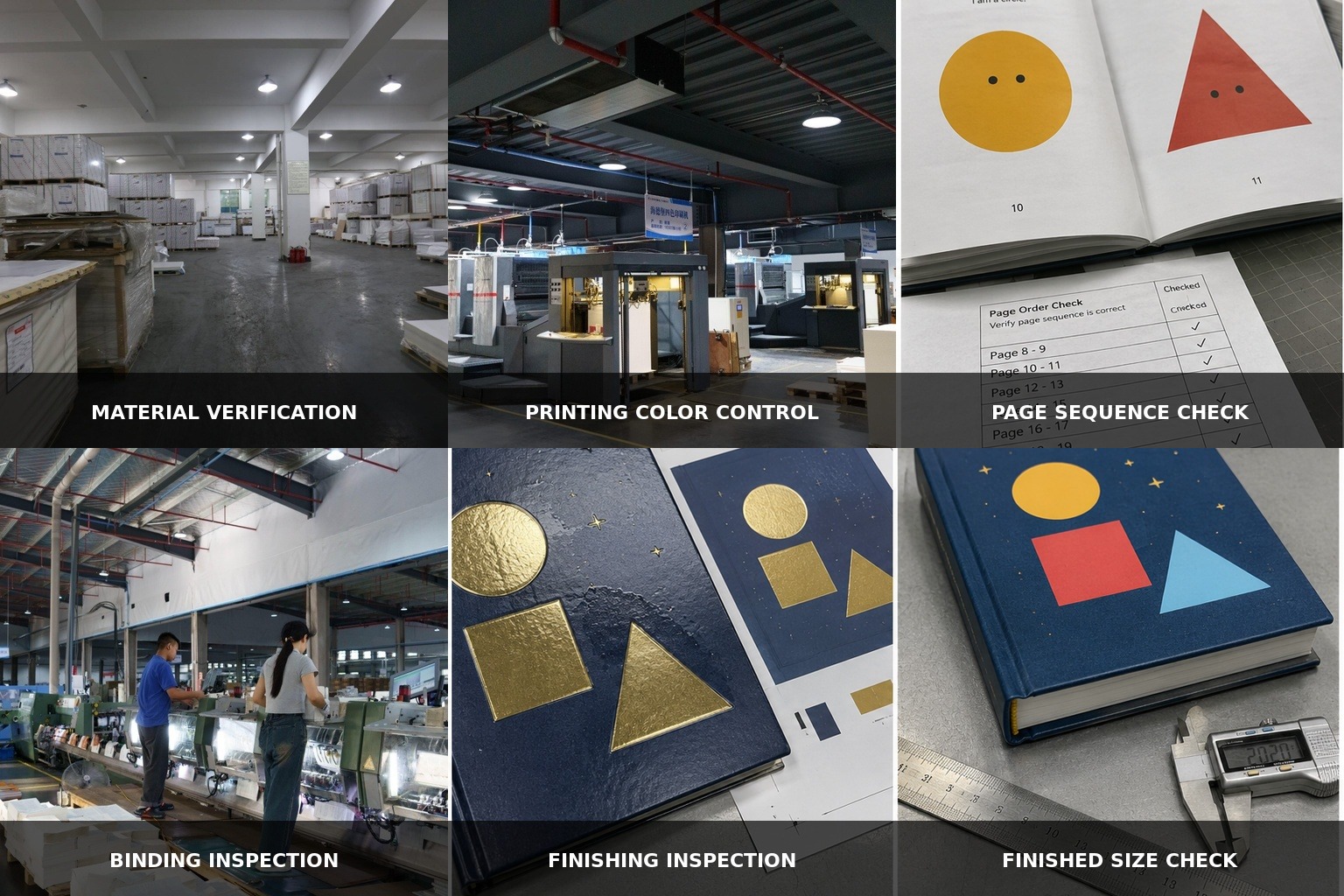
Before production, paper, board and selected cover materials are checked against the confirmed specification. Relevant points include material type, GSM or thickness, surface, color and quantity.
Substituting paper or board without review can change image appearance, book thickness, spine width, opening behavior and carton weight. Materials used for board books, hardcover cases or special structures must therefore correspond with the approved sample or purchase specification.
Prepress and Printing Checks
Print-ready PDF files are reviewed for trim size, bleed, page order, image resolution, fonts and color setup before plate making. Special-finishing layers and dielines are checked separately when required.
During offset printing, production checks include registration, ink density, color balance, image clarity and visible printing defects. Approved proofs, Pantone references or buyer-supplied color samples can be used when defined color matching is required.
Because coated and uncoated papers reproduce color differently, the approved paper must be considered when evaluating the printed result. The relevant production controls are explained on our Offset Printing page.
Binding and Structure Inspection
After folding and collating, the page sequence and orientation are checked before final binding. Inspection points can include:
- Correct page order and complete page count
- Fold and signature alignment
- Spine adhesion, sewing or staple placement
- Board-book mounting and layer alignment
- Hardcover case and book-block position
- Endpaper attachment and hinge movement
- Spiral hole position and coil closure
- Finished trim size and book squareness
- Opening behavior and loose-page checks
Projects with flaps, inserts, shaped pages or die-cut elements require additional checks against the approved structure. More information is available under Book Binding and Assembly.
Lamination and Special-Finishing Checks
Gloss or matte lamination is checked for adhesion, bubbles, scratches, lifting edges and surface consistency. Foil, spot UV, embossing, debossing and die cutting are inspected for position, coverage and registration.
Special finishing should match the approved artwork layer or physical sample. Variations in pressure, material or positioning can affect both appearance and later assembly, so checks are completed before the finished sections move to binding and packing.
Final Inspection and Packing Verification
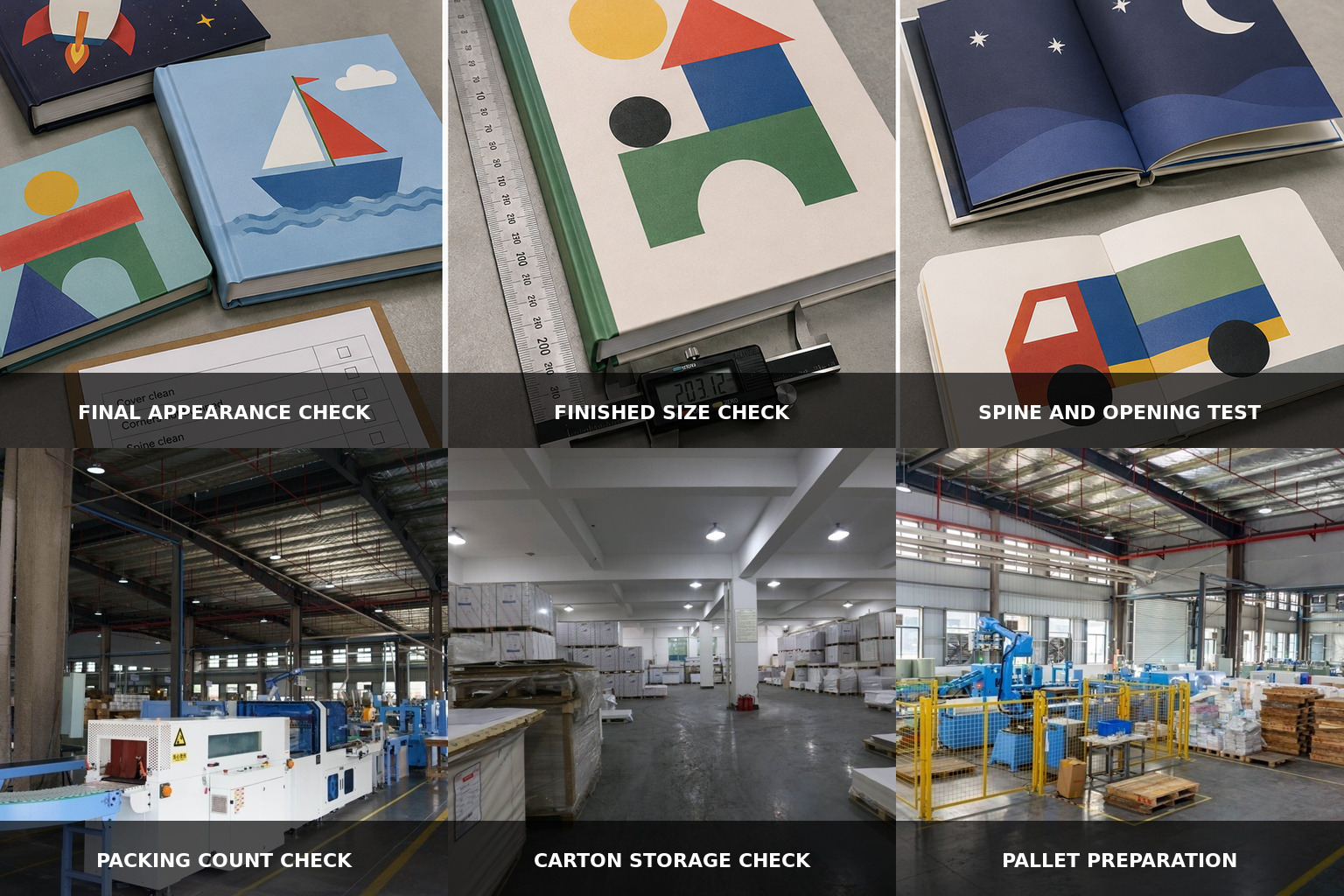
Final inspection covers overall appearance, dimensions, structure, count and packaging. Books are checked for damaged covers, marked pages, visible adhesive, incorrect assembly, uneven trimming and finishing defects.
Packing is verified against the approved method, including individual bags, shrink wrapping, paper wrapping, retail packs, export cartons, carton marks and pallets where specified. Carton quantity, gross weight and shipping marks should correspond with the packing requirements.
 Pre-Shipment and Third-Party Inspection Support
A pre-shipment inspection can be arranged after production is complete and before dispatch. Buyers may provide their own inspection checklist or appoint an independent inspection company. Access, sampling and report requirements should be confirmed before the planned shipment date.
Child-related material or finished-book testing can also be arranged when required by the product design and destination market. EN71, CPSIA, REACH or other compliance should only be stated for products that have actually completed the applicable testing.
Information Needed to Define the Inspection Standard
Send the approved artwork, material specification, physical sample or color reference, dimensional tolerances, finishing requirements and packing instructions. Please also identify any critical defects, sampling standard or third-party inspection requirement.
Clear acceptance criteria allow production and inspection teams to evaluate the same measurable requirements before books proceed to Packing and Export Shipment.